关于展览
展出作品
《鸿雁》邱志杰
总有一个故事,总有一句话,总有一个字,写的是你
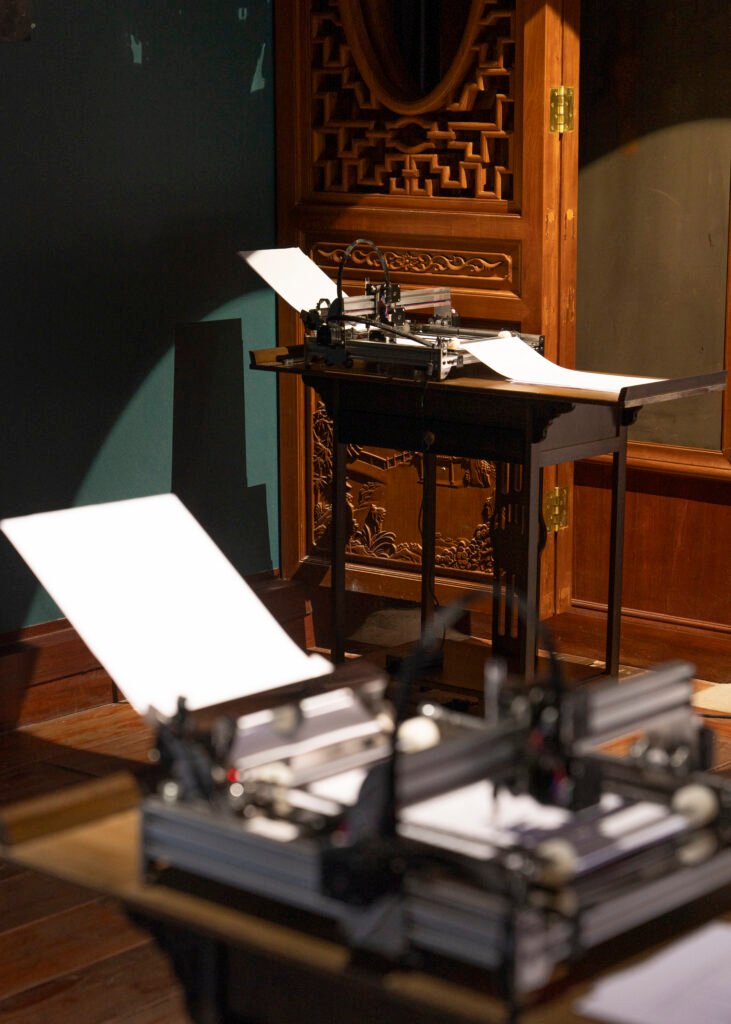
鸿雁意思是投递书信或书信往来。它们不断地书写着信件,书信之间并非各自成趣,而是形成互动与对话,每一台写字机器人的字体都来自馆方征集的真人手写字体,书写的文字有的来自网络上的情书,有的来自艺术家本人编撰的故事,故事里有大禹有伏羲有仓颉有斯文.赫定有李希霍芬有普列瓦尔斯基有井上靖有…..整件作品贯穿古今东西交错,仿佛一场穿越维度的鸿雁传书,也仿若一个宇宙高维智慧体的喃喃自语。同时,在展厅的上部,艺术家放置了一个大型的网,观众可以把信件折成飞机投进网,寄给未来。
“Hongyan” means to deliver letters or exchange letters. They constantly write letters, and the letters are not mutually interesting, but form interactions and dialogues. The fonts of each writing robot come from the handwritten fonts collected by the museum. Some of the written words come from love letters on the internet, and some come from stories written by artists themselves. In the stories, there are Da Yu, Fuxi, Cangjie, Siwen Heding, Li Xihuofen, Plewalski, Inoue Jing, and the whole work runs through the intersection of ancient and modern times, as if a flying goose passing through dimensions, or like the murmuring of a high-dimensional intelligent body in the universe. Meanwhile, in the upper part of the exhibition hall, the artist placed a large net where visitors could fold letters into airplanes and throw them into the net to send to the future.
《洞天》邱志杰
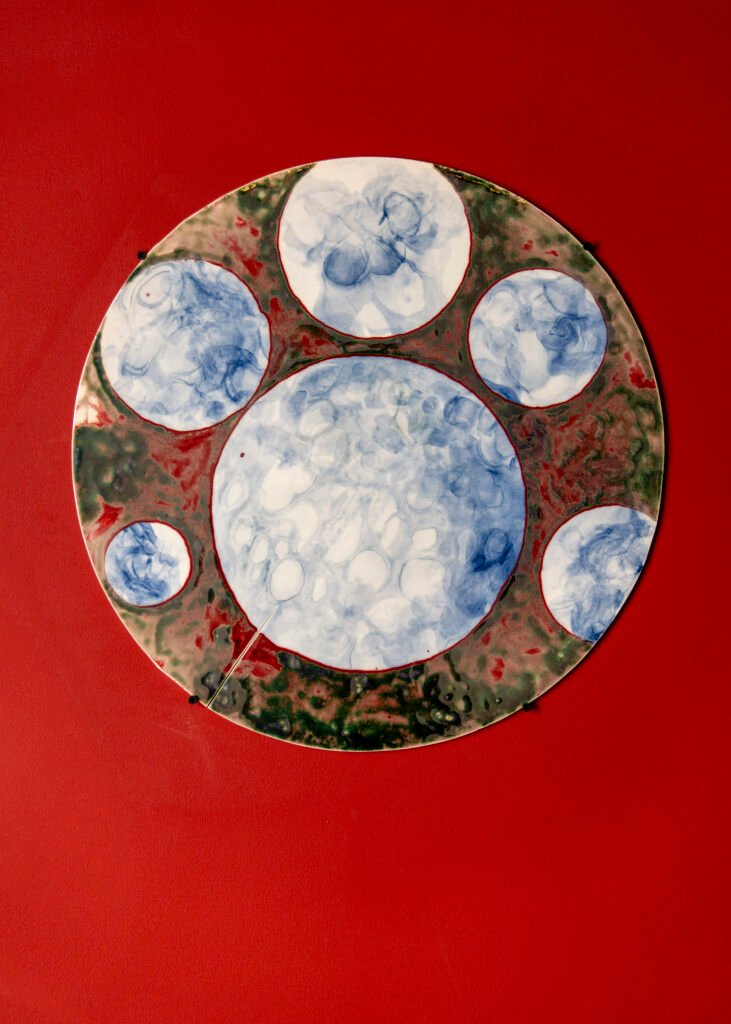
《洞天》是一件青花釉里红的瓷板画作品。它是艺术家创作的6个不同状态的月亮,浓淡之间构成月亮不同的形态,是诗意的月亮,也是纪实的月亮,是人们对月亮不同的想象。与此次景窗位置的《月光》形成了直接的呼应关系。
Paradise is an artist’s creation of six different states of the moon, with varying shades forming different forms of the moon. It is a poetic and documentary moon, representing people’s different imaginations of the moon. This has formed a direct correspondence with the Moonlight which lies in the viewing window.
《树欲静而风不止》邱志杰
字飘在空中,便成了梦
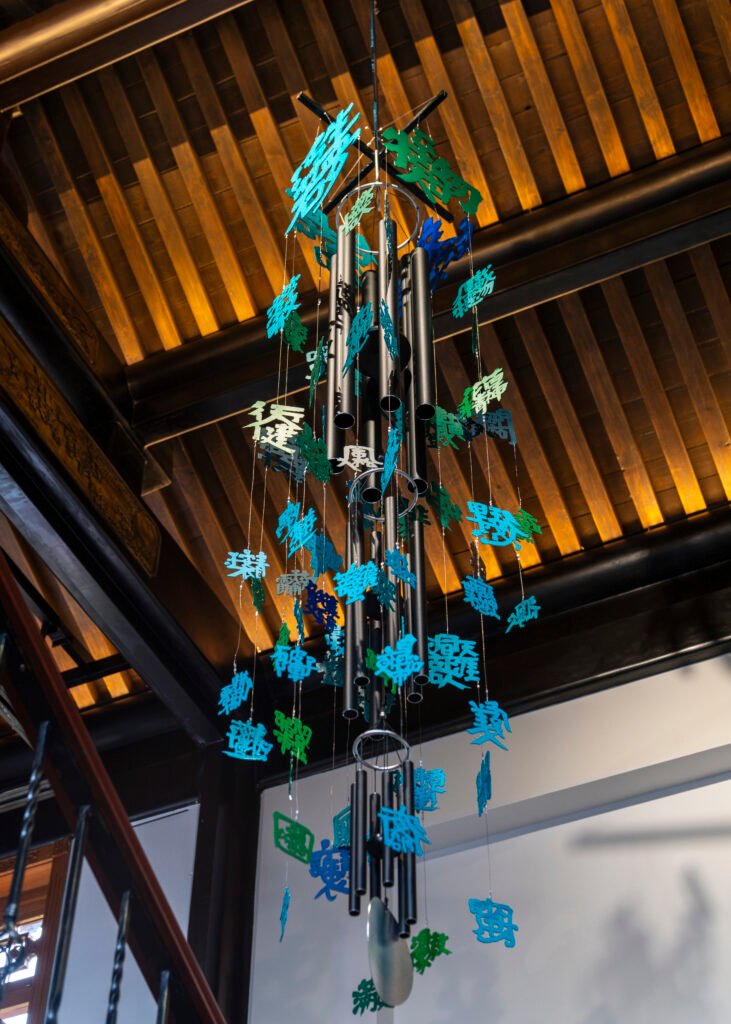
寻着清脆悦耳的风铃声,您可在西侧楼梯旁欣赏到艺术家用合体字创作的风铃作品《树欲静而风不止》。 风把楼梯上的一些字吹散了,它们彼此试探着,组成了一些新的词语,有的熟悉,有的陌生,里面有我们共同的愿。在这里,您可以聆听艺术家讲述他的故事,或安静地读两首小诗,或落墨一二字,再沿着楼梯 徐行至一层。
汉字是结构性的象形表意文字,这种结构让汉字可以拆分,也可以组合。这种结构上的组合性和可拓展性,让汉字具有很丰富的变化。这是中国书法成为艺术的本源,也是汉语能与时俱进的根源。大多数汉字都是合体字,如“明”是“日”和“月”的合体,“人”和“木”组成“休”,表示人在树下休息,“人”和“言”组成“信”,替人带话而不加改变的行为值得信赖,“孬”、“歪”这两个字更是直截了当,不好就是坏,不正就是歪。合体字在篆刻、钱币、道教符箓中均可见到。
邱志杰说,合体字不是简单地把几个字拼成一个大型的字,往往要巧妙的共同偏旁,借用字型拆解、重组,有时候要参考繁简,篆隶楷行草不同字体写法。书法家的风格,用笔粗细习惯,也会反过来影响到字体设计。
《树欲静而风不止》这件作品,艺术家用了72个关于中国文人意识形态的成语词语组成合体字,最上方的是为本次展览专门设计的镜花水月,接下来有浮生若梦、格物自知、白云苍狗、悲欣交集等等,您可以轻触风铃,阵风吹过,风铃声声,同频的是我们内心深处对传统文化和生命的认同。
Follow the crisp sound of wind chimes to discover The Tree Desires Tranquility, but the Wind Never Ceases, a poetic staircase installation by artist Qiu Zhijie, located on the west staircase. Here, scattered Chinese characters interact across the steps—merging, transforming, and forming new, sometimes familiar, sometimes surprising words. These combinations reflect our shared cultural aspirations.
Chinese characters, as structural pictographs, can be split and recombined. Their flexible structure is what gives rise to the art of calligraphy and allows the written language to evolve over time. Many characters are compounds—like “明” (sun + moon), “休” (person + tree), or “信” (person + speech), each carrying layered meanings. These forms are found in seal scripts, coins, and talismans, revealing deep connections between visual form and language.
Qiu emphasizes that character construction is not just visual assembly. It involves clever use of shared radicals, borrowing from various font styles—simplified and traditional, seal, clerical, regular, and cursive scripts—while also drawing from the calligrapher’s brush techniques and visual rhythms.
In this piece, Qiu created a composite character using 72 idioms tied to Chinese literati ideals. At the top is “Mirror, Flower, Water, Moon”—a phrase designed specially for this exhibition—followed by others like “Floating Life Like a Dream,” “Study the Nature of Things,” and “The Intersection of Sorrow and Joy.”
You are invited to gently tap the wind chimes, listen to their resonance, read two short poems, or write your own reflections in ink—each act echoing our collective memory and affection for tradition, language, and the fleeting nature of life.
《罗网》邱志杰
这世界本没有网,因欲望而自缚的人多了,也便有了网
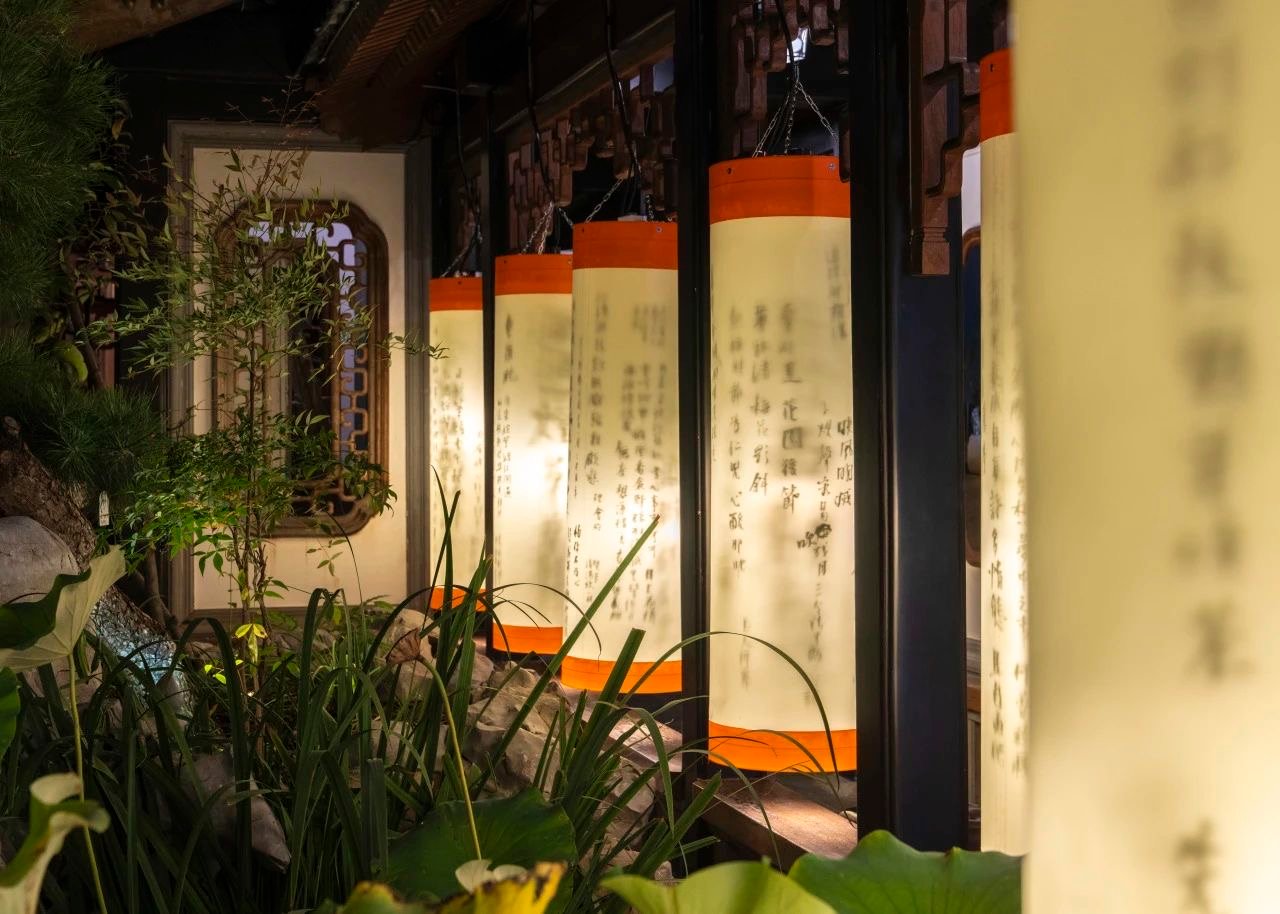
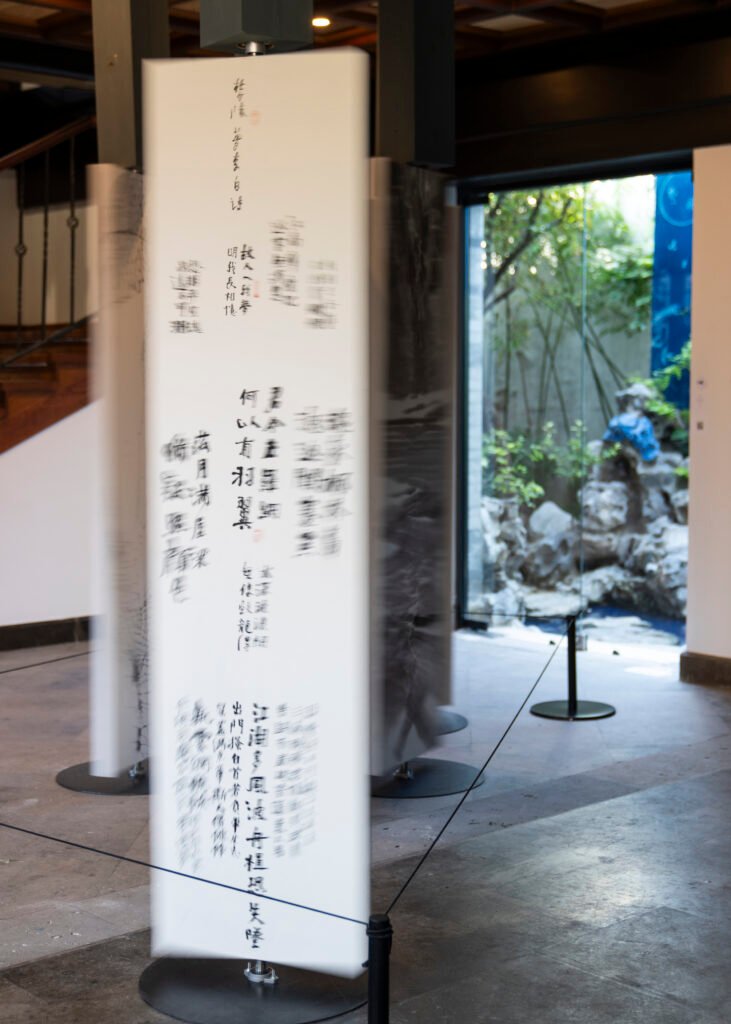
室内的作品高速转动,运用了留影盘的视觉残留原理,画面叠在一起,看不清楚。作品中一面是诗,一面是画,都和网有关,画上有蜘蛛网、渔网、神经元、闪电、地上的道路等。七首诗中有元好问的《摸鱼儿·雁丘词》,“其脱网者悲鸣不能去,竟自投于地而死”,也是《神雕侠侣》开头就引用的“问世间情是何物,直教生死相许。天南地北双飞客,老翅几回寒暑”;有苏东坡《赤壁赋》中的“举网得鱼,巨口细鳞,状如松江之鲈。顾安所得酒乎”;杜甫的《梦李白》,“君今在罗网,何以有羽翼”;陶渊明的诗“久在樊笼里”也与网有关。
The indoor works rotate at high speed, using the visual residual principle of the image disc, and the images are stacked together, making it difficult to see clearly. In the work, there is a poem on one side and a painting on the other, both related to the web. The painting features spider webs, fishing nets, neurons, lightning, and roads on the ground. Among the seven poems, there is Yuan Haowen’s Fishing in the Wild Goose Hill, which goes, ‘The fish who escaped from the net cried out in sorrow and couldn’t go, yet it threw itself to the ground and died’.
It is also quoted at the beginning of The Condor Heroes as ‘Asking what love is in the world, teaching life and death to be together. Flying guests from all over the world, how many times do old wings experience cold and heat’.
There is a line in Su Dongpo’s Ode of the Red Cliff that goes, ‘When you lift a net, you catch a fish with a huge mouth and fine scales, resembling the perch of Song River. Gu An catches wine’.
Du Fu’s Dream of Li Bai says, ‘You are now in a net, how can you have wings’. And Tao Yuanming’s poem ‘Long in a Cage’ is also related to the net.
《哲人王的镜子》邱志杰
谁都可以是哲人,关键是要找到镜子
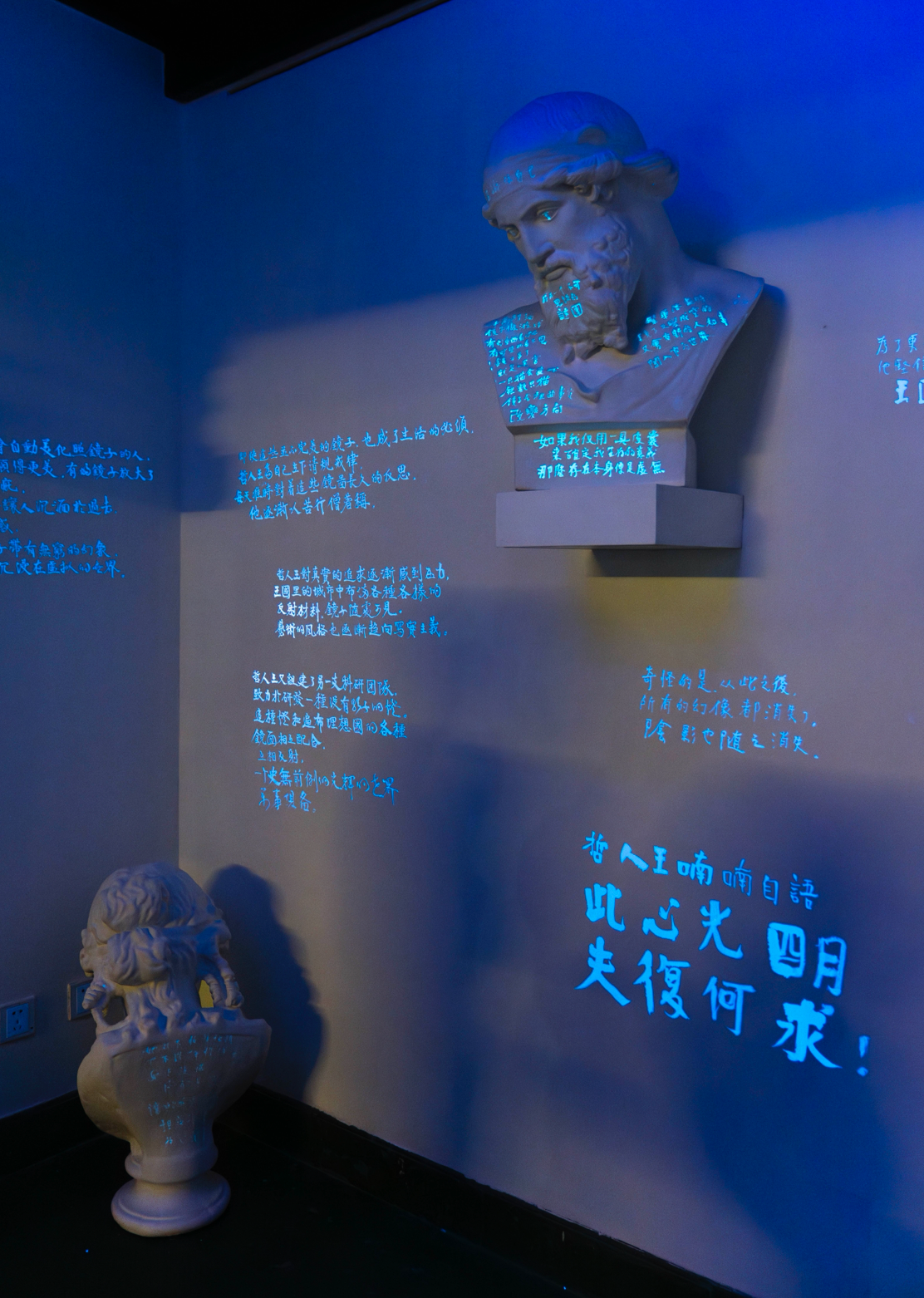
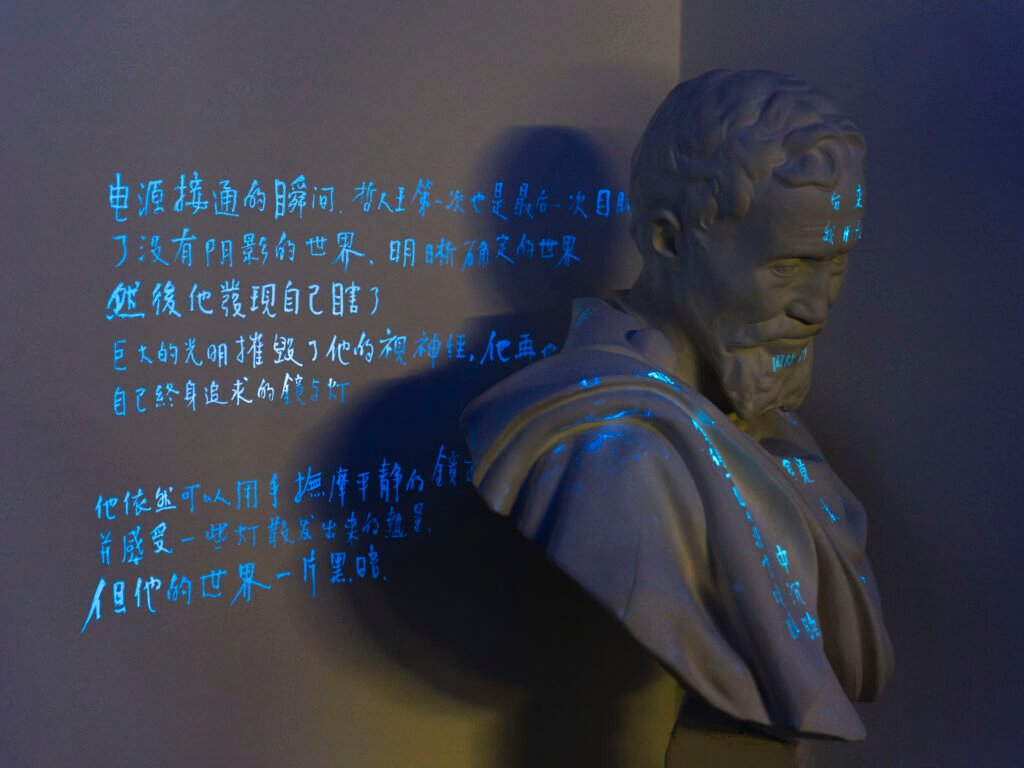
《哲人王的镜子》整个空间布满了邱志杰以特殊荧光颜料书写的故事和诗歌,艺术家将故事写在不同的石膏人像上,石膏正面文字为正常书写,背面文字为镜像书法,当您用蓝光灯照射石膏像时,可以看到故事的不同段落以及不同的诗歌。
The entire space of “The Mirror of the Philosopher King” is filled with stories and poems written by Qiu Zhijie with special fluorescent pigments. The artist writes the stories on different plaster figures, with normal writing on the front and mirrored calligraphy on the back. When you shine a purple light on the plaster figure, you can see different paragraphs of the story and different poems.
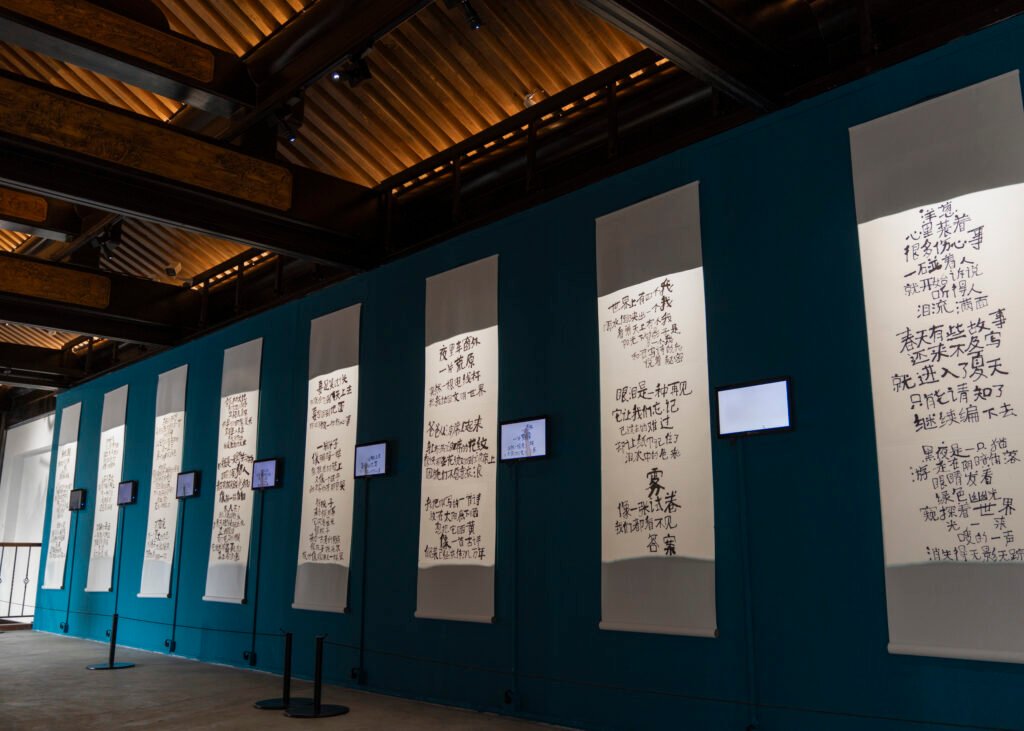
《倒写书法·儿童诗》邱志杰
谁有权安排人生的顺序?你的生命 你做主
《倒写书法·儿童诗》是艺术家邱志杰以其代表性的倒写书法形式,呈现的二十四首儿童诗作,其中包括自闭症儿童和三岁幼童的作品,稚趣中蕴含深意。
倒写书法自最后一个字的最后一笔开始书写,要求创作者对笔顺和字形结构有极深的理解与熟练掌握。邱志杰已坚持创作25年,书写行云流水,一气呵成。他始终认为,书法不是“术”或“艺术”,而是书写的“法”与“道”。
作品旁的视频通过倒放方式,展示墨迹被一笔笔“抹去”,呈现作品从有到无的过程,也验证艺术家对文字结构的深刻把握。纸上书法、录像影像与观者的观看,共同构成了完整的艺术体验。
邱志杰曾说,人类最伟大的两种艺术是德国古典音乐与中国书法,它们的共通之处,是能极致地表达人类情感。
“Inverted Calligraphy · Children’s Poetry” is a representative work of Qiu Zhijie’s reversed calligraphy. It features 24 poems written by children, including some by autistic children and others as young as three years old—playful, yet surprisingly profound.
Reversed calligraphy means starting from the last stroke of the last character, requiring deep familiarity with character structure and stroke order. Qiu has practiced this method for over 25 years. He believes calligraphy is not merely an art or technique, but a method and a way—a system of thinking and expression.
Alongside the work, a video plays in reverse, showing ink being gradually erased stroke by stroke. It mirrors the process from existence back to nothingness, visually proving the artist’s mastery of every detail in the writing.
The piece comprises three elements: the physical calligraphy, the reverse video, and the viewer’s perception—together forming a poetic meditation on time, memory, and expression. Qiu compares Chinese calligraphy to German classical music—two of humanity’s highest art forms—for their ability to express emotion with extreme subtlety.ems.
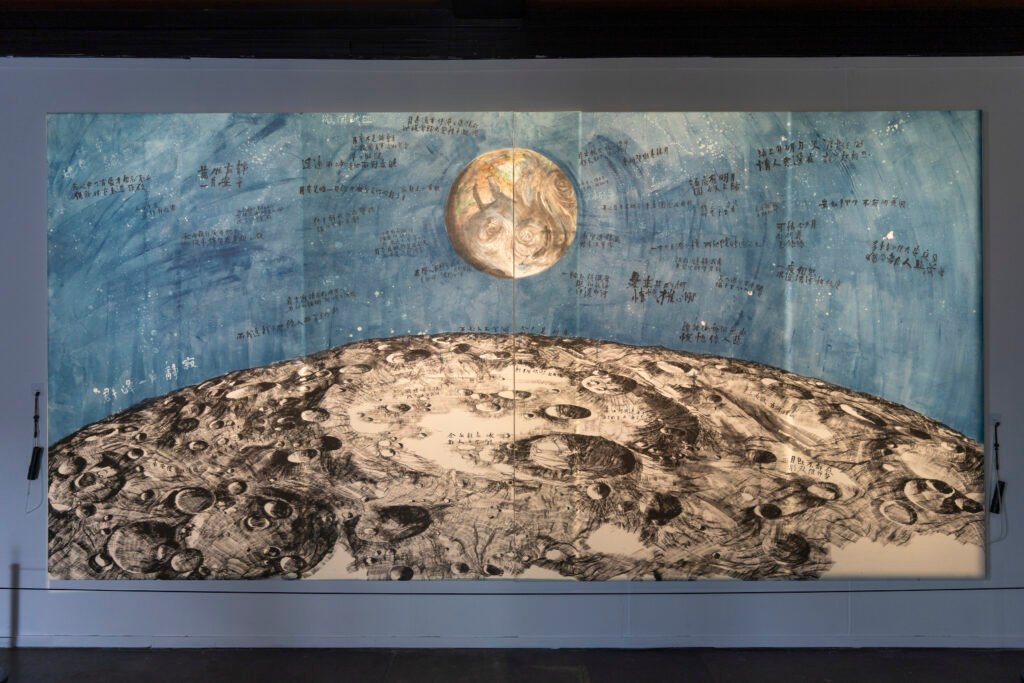
《如果没有月亮李白就再也不会写诗了》邱志杰
处处都是诗,只是李白不常有
《如果没有月亮李白就再也不写诗了》这组作品的名字来自一个7岁孩子的诗作,邱志杰绘制了三张关于月 亮的图画,以艺术家的视角表现月球表面丰富的视觉元素,再用特殊的荧光颜料将诗写在画面上。当观众 用紫光灯照射画作和周围墙面的的不同位置,各种不同的诗句也显现出来。诗人、艺术家、孩子,当我们面对同一轮明月, 未必所发之情不尽相同。
The name of the group of works “If there were no moon, Li Bai would never write poetry again” comes from a poem by a 7-year-old child. Qiu Zhijie drew three pictures about the moon, expressing the rich visual elements on the surface of the moon from the artist’s perspective, and then wrote the poem on the picture with special fluorescent paint. When the audience shines purple light on different positions of the painting and surrounding walls, various poetic lines are also revealed. Poets, artists, and children, when we face the same bright moon, our emotions may not necessarily be the same.
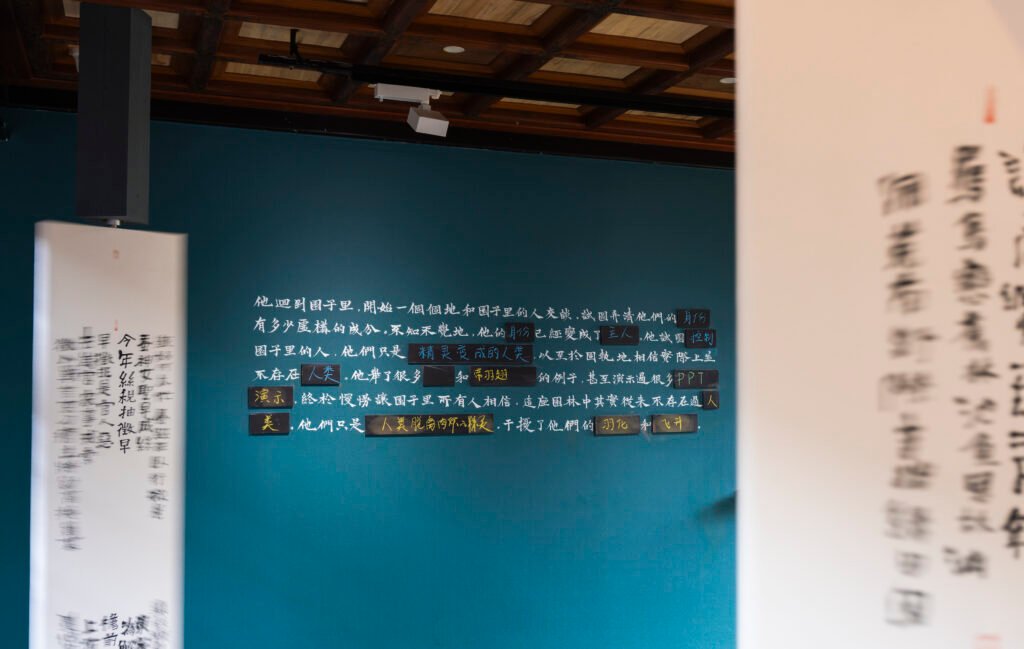
《我用一生想忘掉这个园林》邱志杰
上手填空,修补自己的人生
《我用掉一生想要忘掉这个园林》这件作品是来自艺术家以美术馆建筑为灵感的一件作品,艺术家编纂了4个故事,每个故事都集合了神话、历史、科幻,天马行空脑洞大开,但是每个故事都有些缺失的关键词,观众可以在黑板处补上自己的关键词,形成自己的故事线索,展览也因此有了无限多的可能。展厅东墙是关于后羿和嫦娥的故事,西墙是仓颉造字的故事。
The artwork ‘I Spent My Life Wanting to Forget This Garden’ is inspired by the architecture of an art museum. The artist has compiled four stories, each of which combines mythology, history, and science fiction, creating a wild imagination. However, each story has some missing keywords, and the audience can add their own keywords on the blackboard to form their own story clues. As a result, there are infinite possibilities for exhibitions. The east wall of the exhibition hall tells the story of Hou Yi and Chang’e, while the west wall tells the story of Cangjie creating characters..
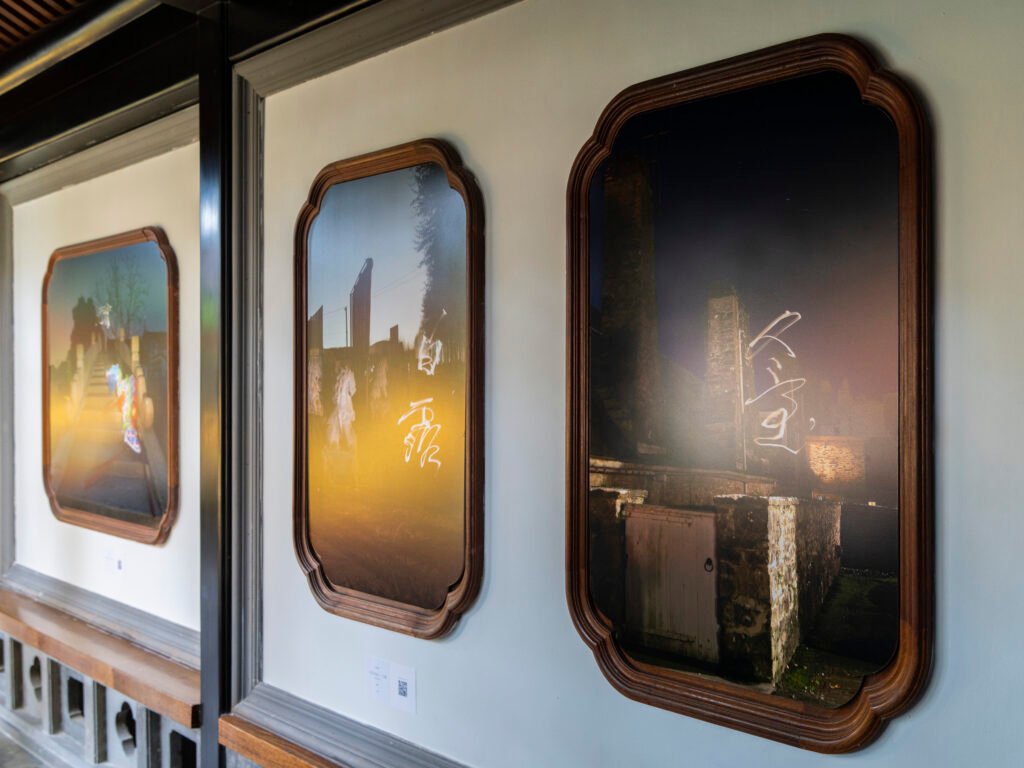
《光写书法》系列 – 邱志杰
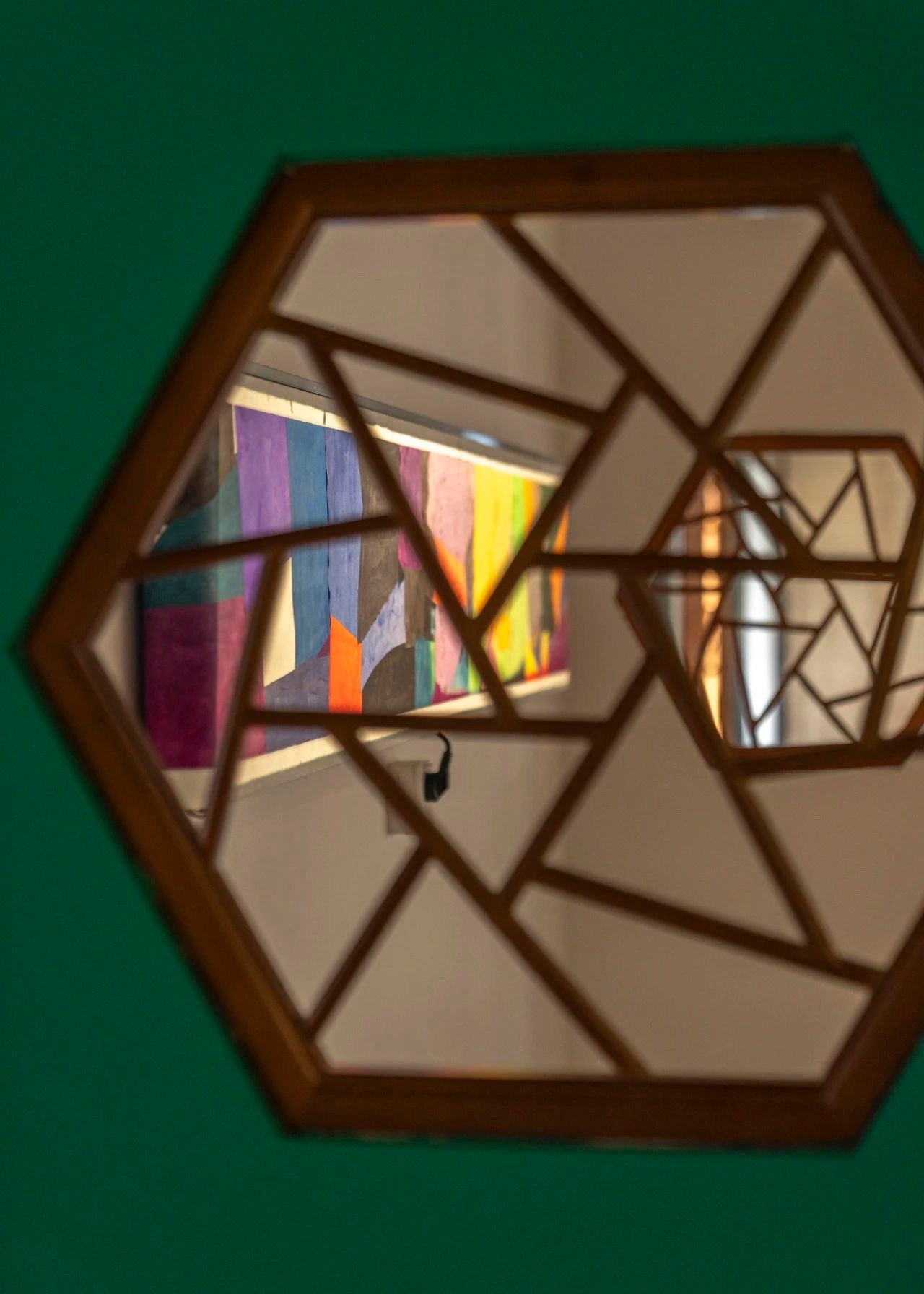
回廊另一侧的什锦窗内是邱志杰的《光写书法》系列,他依据二十四节气的顺序,利用长时间快门曝光在不同地点以光书写节气名称,“我这套摄影按照节气月令来事先规划拍摄的时间和书写的内容,书写的地点则取决于当时我自己身在何方”邱老师这样说。他根据不同语境变化,将中国传统书法笔意与文化内涵注入光的痕迹之中,从而使得图像呈现出了联结过去与现在、物质与时间的无限延展性。漫步在这条回廊,我们也就感知了园林中的四季。
On the other side of the corridor, inside the mixed window is Qiu Zhijie’s “Illuminated Calligraphy” series. Based on the order of the 24 solar terms, he uses a long-term shutter to expose and write the names of the solar terms at different locations with light. “My photography set plans the shooting time and writing content in advance according to the solar terms and lunar calendar, and the writing location depends on where I am at that time,” said Qiu. He infused the brushstrokes and cultural connotations of traditional Chinese calligraphy into the traces of light based on different contextual changes, thus presenting images with infinite extensibility that connects the past and present, material and time. Strolling along this corridor, we also perceive the four seasons in the garden.
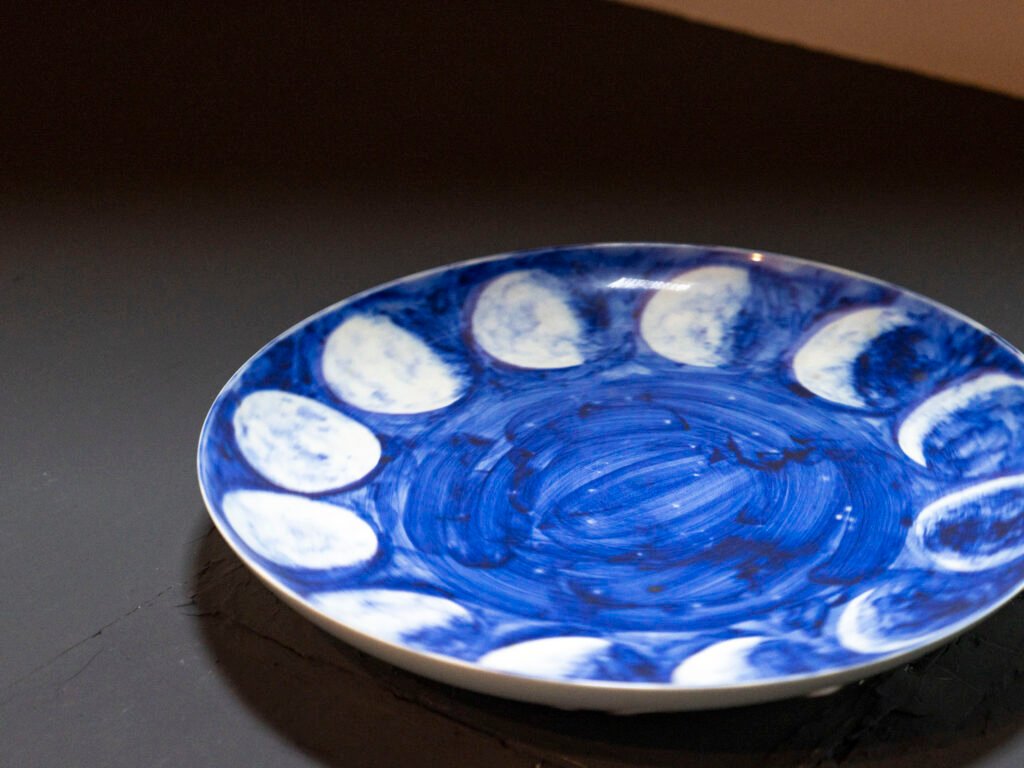
《视错觉塑望》邱志杰
我们靠错觉活下去,错觉也许是希望,是明天
《视错觉朔望》邱志杰手绘青花瓷盘,通过频闪灯和青花瓷盘的转速配合,形成视错觉,为观众呈现月亮圆缺变化的过程,与天 空中的月亮遥相呼应。作品《七星井》由 7 个艺术家手绘釉色陶瓷圆盘组成,艺术家将热敏文字以釉上彩的形式呈现 在陶瓷盘中。当您的身体靠近时,文字会显现蓝色的盘子上,当身体离开,瓷盘感觉不到温度,色彩也将满满褪去。《七花园》为一组拓片系列作品。艺 术家通过文字与图像的研究,探讨了对文人世界中文字花园的奇思妙想从而引发一系列不同人物命运的故事想象。
Qiu Zhijie hand-painted a blue and white porcelain plate in “Visual Illusion Syzygy”. Through the combination of strobe lights and the rotation speed of the blue and white porcelain plate, a visual illusion is formed, presenting the process of the moon’s round and short changes to the audience, echoing the moon in the sky from afar. The work ‘Seven Star Well’ consists of seven artists hand drawing glazed ceramic discs, and the artists present thermal sensitive text in the form of glazed colors on the ceramic discs. When your body approaches, the text will appear on the blue plate. When your body leaves, the porcelain plate will not feel the temperature and the color will fade away. “Seven Flower Gardens”is a series of rubbings. Through the study of text and images, artists explore the imaginative ideas of the garden of words in the literary world, which trigger a series of stories about the fates of different characters.
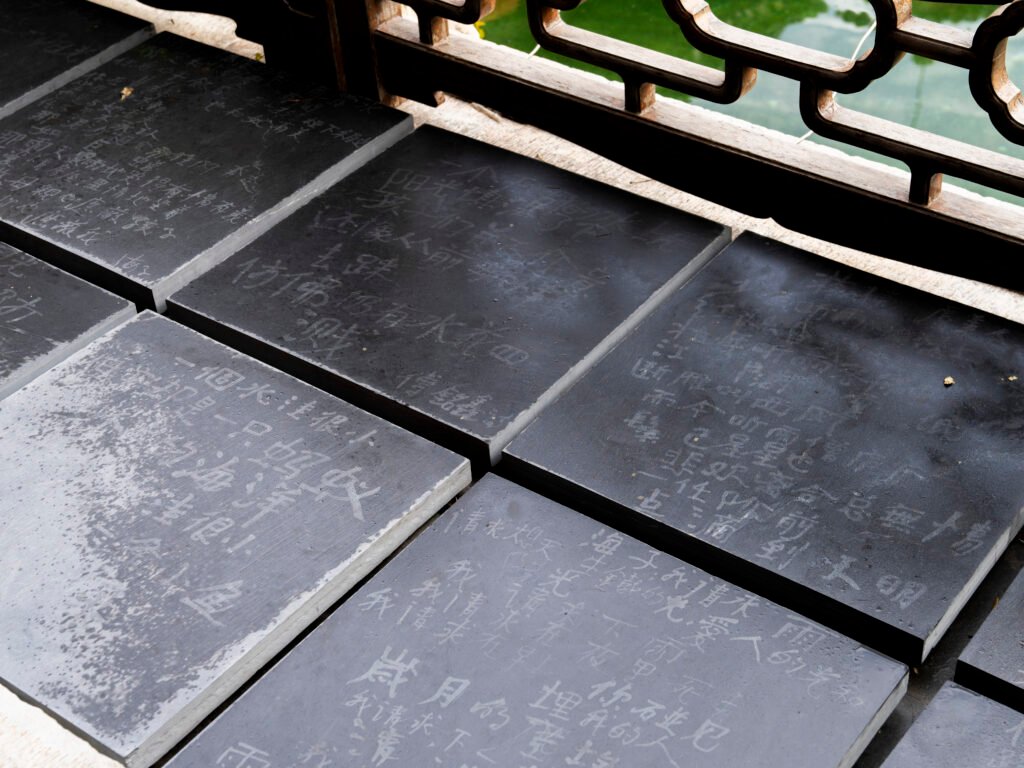
《等待一场雨》邱志杰
你可以让所有的意外,都成为惊喜
您现在看到的这组作品是《等待一场雨》这组作品灵感来自一座诗情画情且多雨的南方古城。邱志杰用疏水材料将诗歌写在石板上,等一场雨的到来,石板上的诗歌便会浮现。一个“等 “字,表现着中国人对时间和美之间关联的理解。作品用循环喷洒的人工水雾,模拟雨天 效果,通过15分钟一次的喷雾,让诗歌渐现渐隐,解读时间的轮回,与观众共同“等待一场雨”。
The group of works you are seeing now is’ Waiting for a Rain ‘. The inspiration for this group of works comes from a poetic, picturesque, and rainy ancient city in the south. Qiu Zhijie used hydrophobic materials to write poems on stone slabs, and when a rain comes, the poems on the stone slabs will emerge. The word “waiting” shows the Chinese people’s understanding of the relationship between time and beauty. The work uses the artificial water mist sprayed circularly to simulate the effect of rainy days. Through the spray every 15 minutes, the poem gradually appears and disappears, and interprets the cycle of time, “waiting for a rain” with the audiences together.
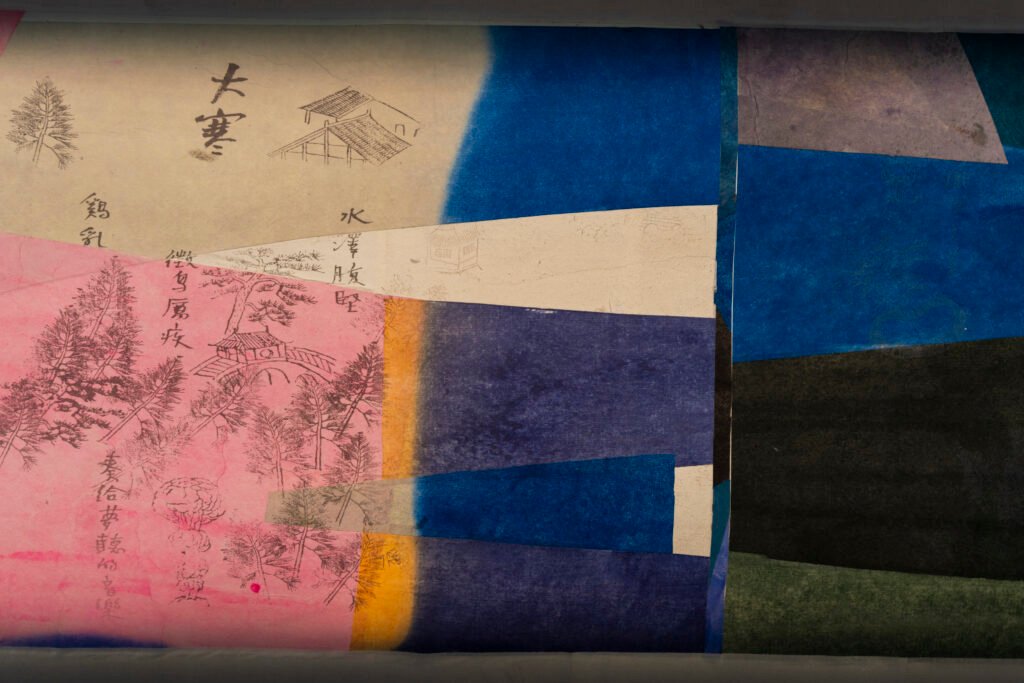
《卧游之七十二候》局部 邱志杰
《卧游之七十二候》 通过绘画、电机转动、温敏材料的巧妙使用,使原本看起来是纯抽象绘画的作品,显现出文字、诗歌与绘画。随着作品温度渐渐散去,原本清晰的画面逐渐退去,周而复始。
Through the smart use of painting, motor rotation, and temperature sensitive materials, the works of “The Seventy-two Marquis of Reclining and Wandering” and “The River of Reclining and Wandering” reveal text, poetry, and painting, which originally appeared to be purely abstract paintings. As the temperature of the work gradually dissipates, the originally clear images gradually fade away, going round and beginning again.
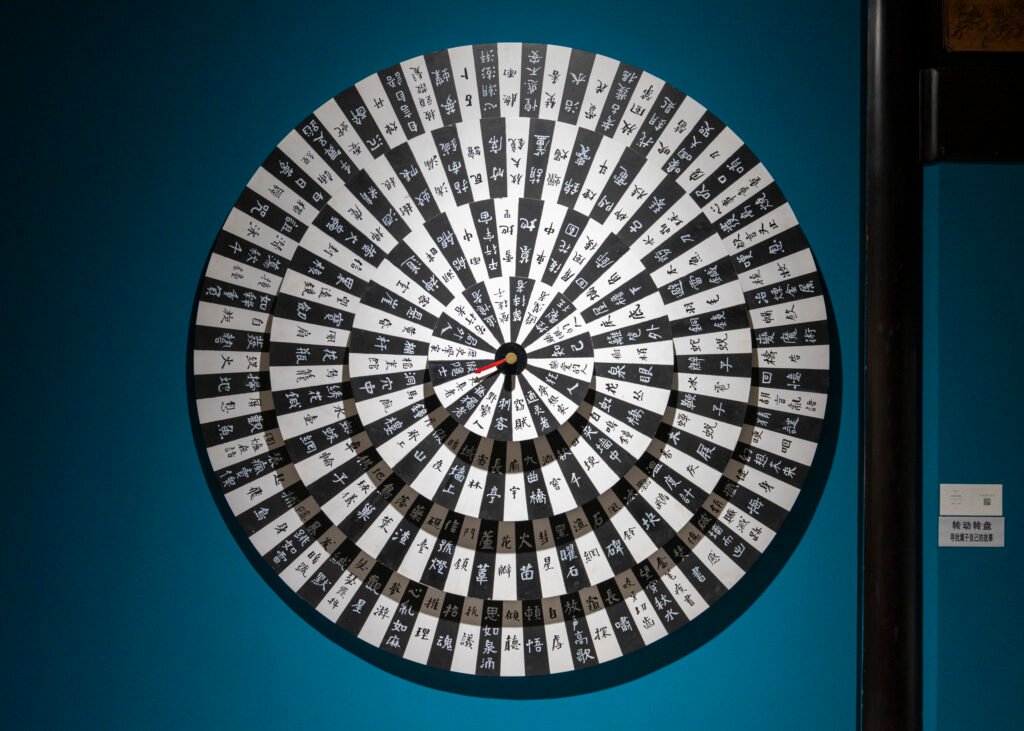
《故事新编》邱志杰
要相信天命不可违,也要相信时来运转
《故事新编》是一件直径两米的作品,上面由艺术家书写了众多的词语,观众可以转动转盘,当转盘转动最终静止的那一刻,就形成了独属于自己的故事,有古时占卜之意趣。
“New Story Compilation” is a work with a diameter of two meters, on which the artist has written numerous words. The audiences can rotate the turntable, and when the turntable finally comes to a stop, it forms their own unique story, with the charm of ancient divination.
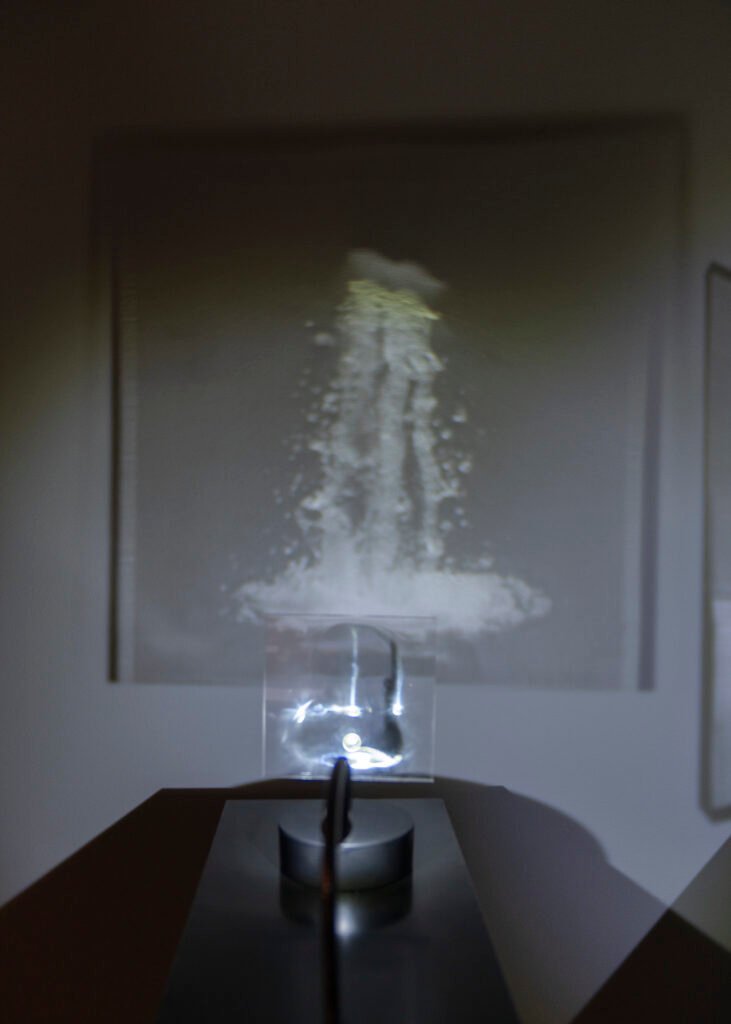
《转瞬即逝的雕塑》邱志杰
安安静静的一滴水,翻来覆去的任你赏
《转瞬即逝的雕塑》呈现了四种不同水的形态。当光线穿过表面不平整的透明物体时会产生折射,这种现象被称为焦散,中科大数院课题组利用该原理发明了一种通过在透明物体表面制造刻痕操纵光线生成图像的算法。算法生成模型后由微米级雕刻机在亚克力表面加工出成千上万个凹凸透镜的组合,光线集中的地方形成图像中的亮域,光线分散的地方形成图像中的暗域,明暗的有机排列最终组成了目标图像。艺术家邱志杰利用光的折射和反射现象,结合中科大数院的最前沿研究,创作出可视的水波纹的状态,正呼应了本次展览主题“镜花水月”这个主题中的“水”,水是滔滔的时间,包容万象。
A Fleeting Sculpture presents four different forms of water. When light passes through a transparent object with an uneven surface, refraction occurs, a phenomenon known as defocusing. The research group of the School of Mathematics at the University of Science and Technology of China has invented an algorithm for generating images by manipulating light by creating scratches on the surface of the transparent object. After the algorithm generates the model, thousands of concave convex lens combinations are processed on the surface of acrylic by a micrometer scale engraving machine. The areas where light is concentrated form the bright areas in the image, while the areas where light is scattered form the dark areas in the image. The organic arrangement of light and dark ultimately forms the target image. Artist Qiu Zhijie utilizes the phenomena of refraction and reflection of light, combined with the cutting-edge research of the School of Mathematics at the University of Science and Technology of China, to create a visible state of water ripples, echoing the theme of ‘water’ of this exhibition Mirror in the Flower, Water in the Moon. Water is a surging time that encompasses all things.
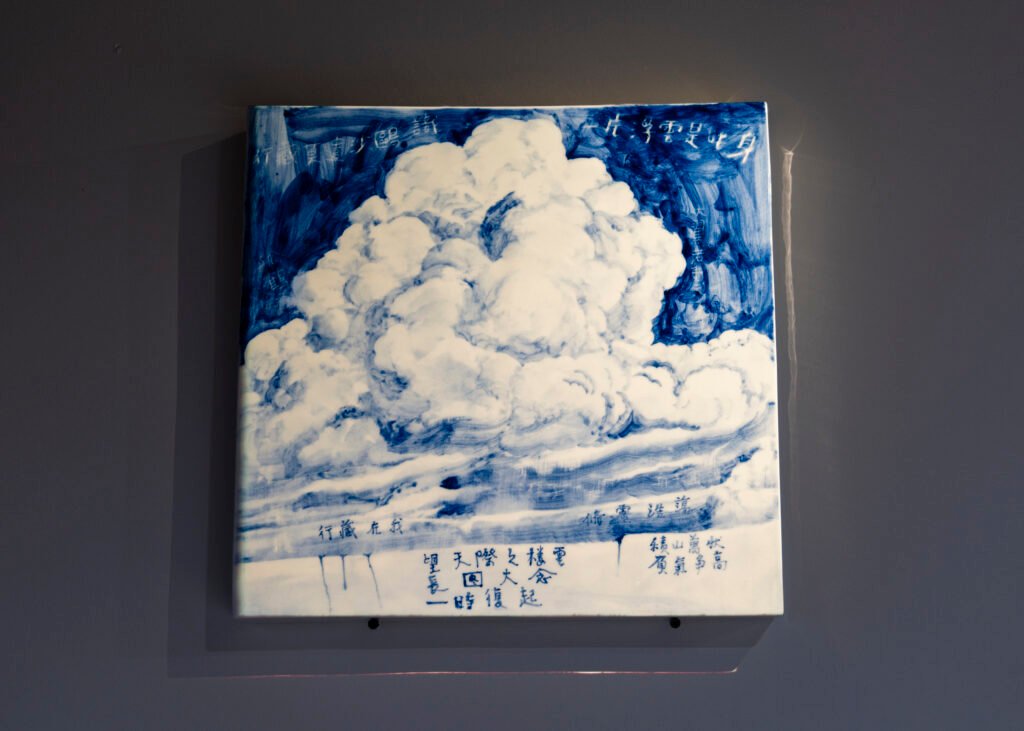
《望天际之浮云》邱志杰
《浮云游子意》《古来云海茫茫》《寥寥长风》《望天际之浮云》《大风起兮》是一组主题为云的瓷板画。有浮云、卷积云、云海、层云等。云是水液化的状态,只是因为水滴较小,凝华在一起变成我们看到的云。配上与云相关的词与诗,让脉脉诗情随长风直上云霄。与一楼的作品《转瞬即逝的雕塑》,同一位置的一上一下,一水一云,呼应了本次展览主题“镜花水月”的“水”。
The group of porcelain panel paintings with the theme of clouds includes The Emotions of Floating Cloud and Wanderers, The Vast Sea of Clouds Since Ancient Times, The Lonely and Sparse Winds, The Floating Clouds in the Sky and The Strong Wind Rises. There are floating clouds, cumulus clouds, sea of clouds, stratiform clouds, etc. Clouds are in a state of water liquefaction, simply because the droplets are small and condense together to form the clouds we see. Paired with words and poems related to clouds, the poetic sentiment rises to the sky with the long wind. The artwork A Fleeting Sculpture on the first floor, with one up and one down, one water and one cloud in the same position, echoes the theme of ‘water’ of the exhibition Mirror in the Flowers, Water in the Moon.
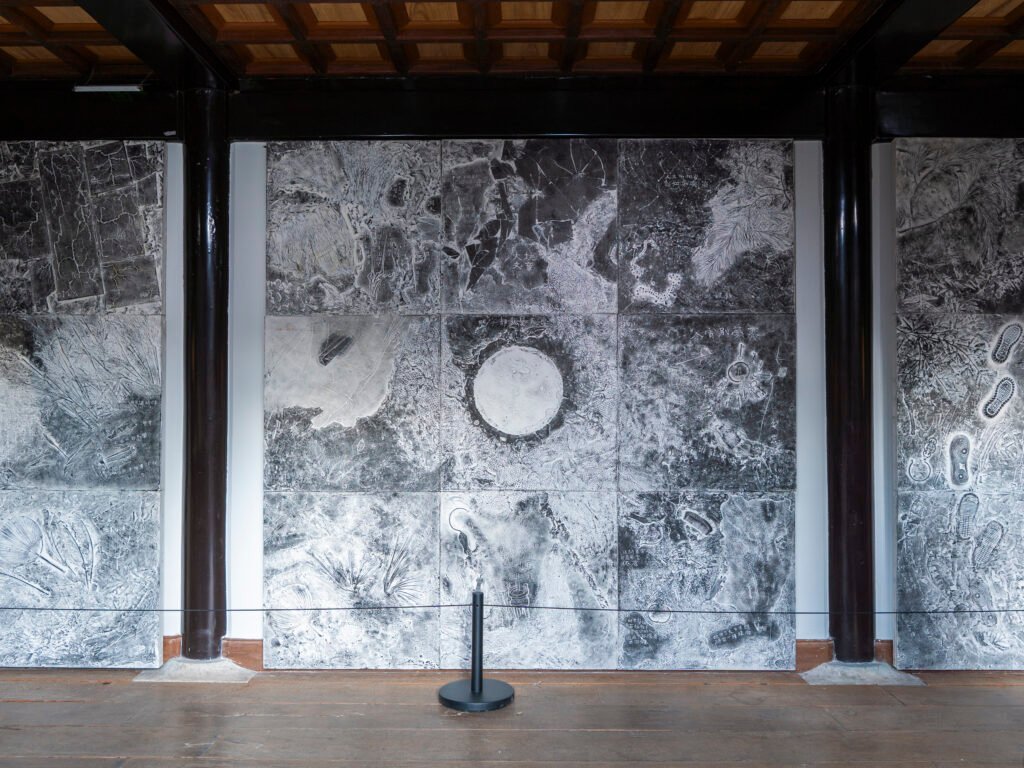
《夜游》邱志杰
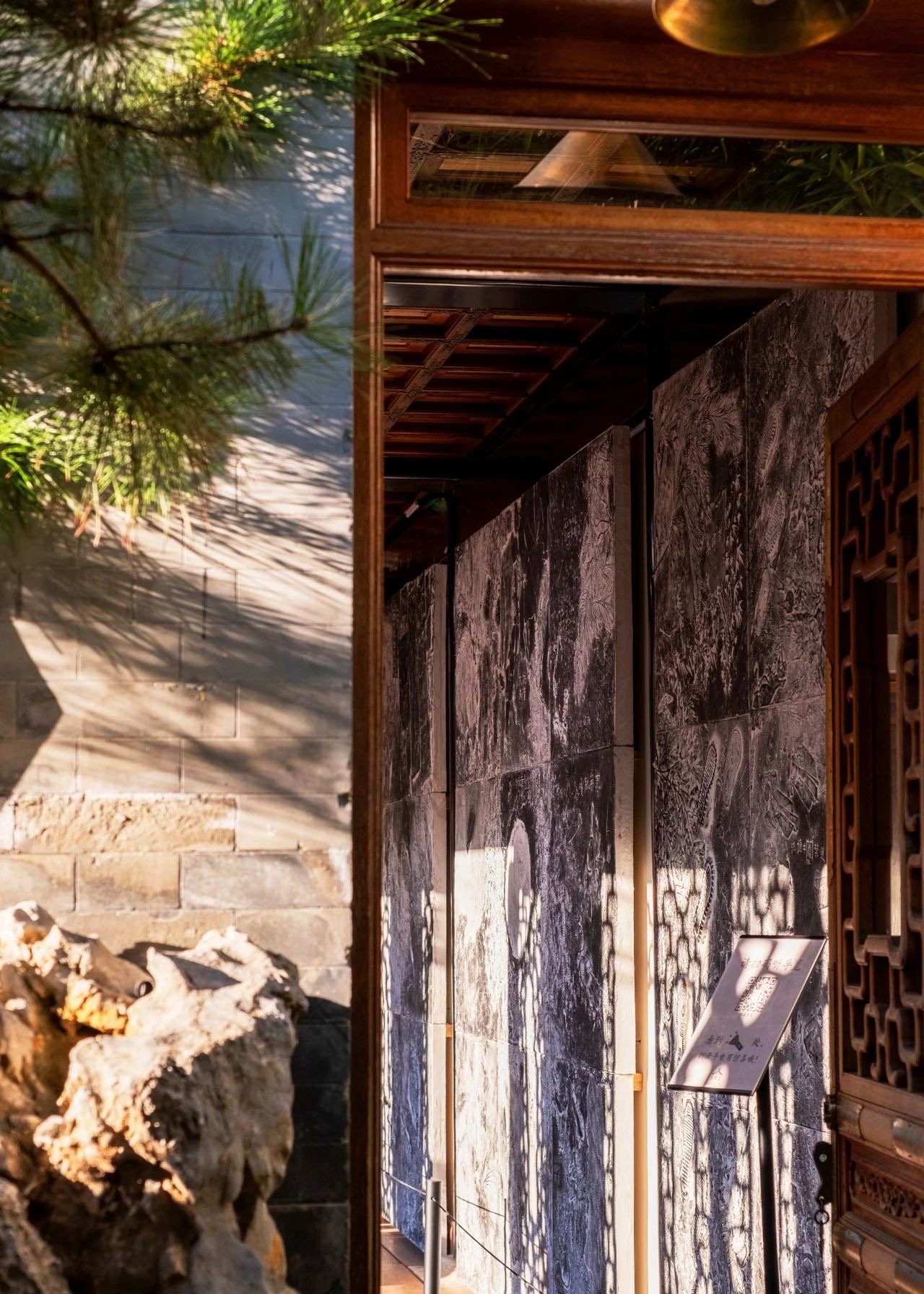
东厅墙面悬挂的是邱志杰的拓印作品《夜游》。艺术家以渔网、扇子、植物、金属等日常材料在石膏板上压出浮雕质感,再以墨汁拓印成像。宣纸遇水膨胀的特性使得高处为黑、下陷为白,显隐之间,形成丰富的光影层次。
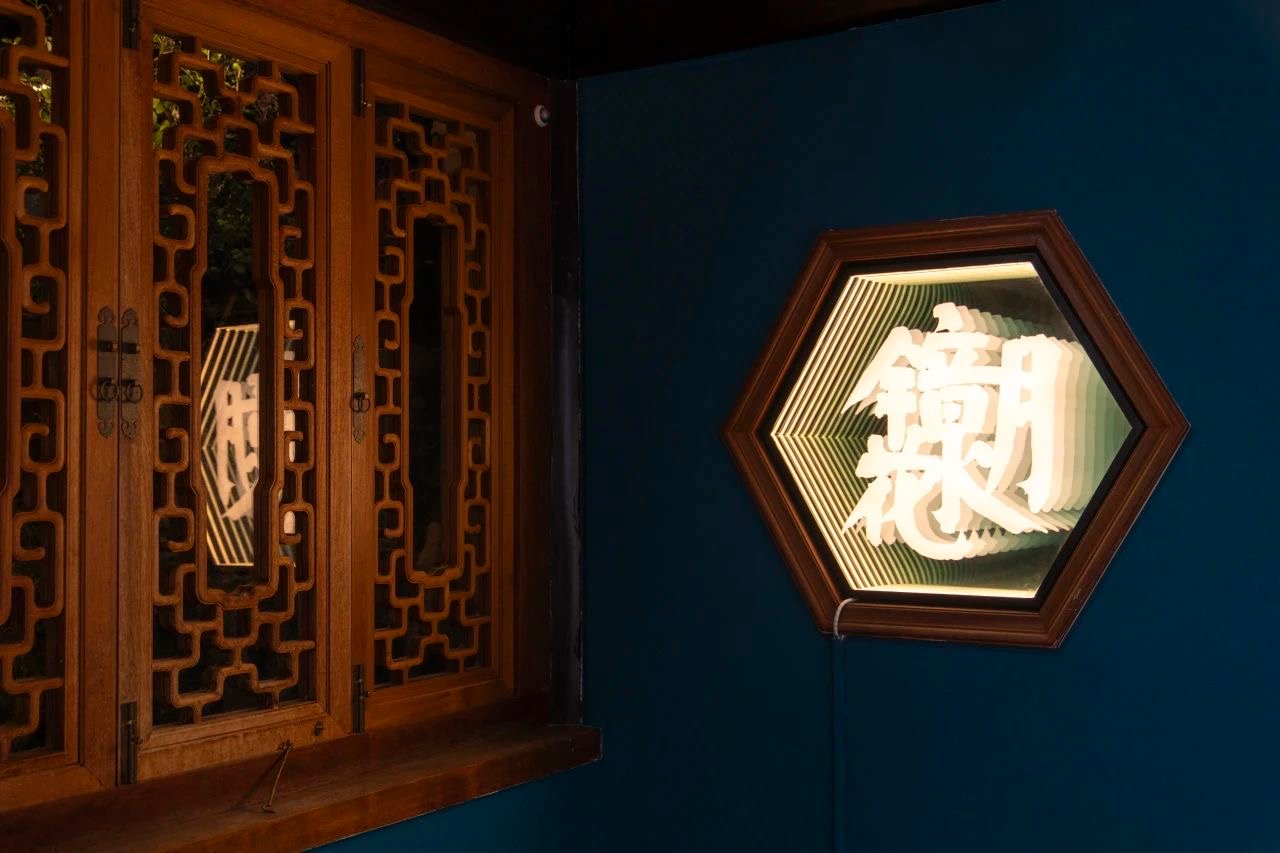
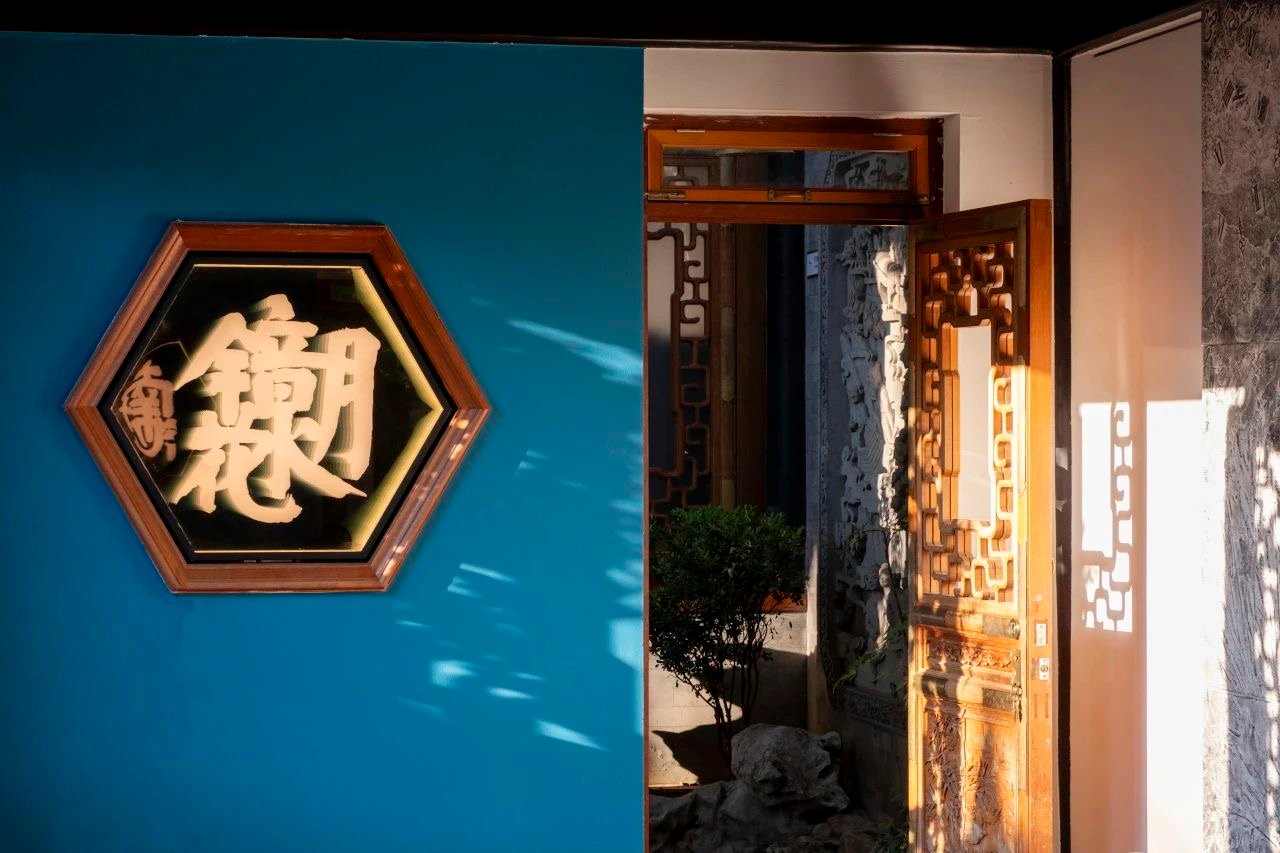
展厅南北墙的原六角窗户被艺术家创作的“南池子”和“镜花水月”两个合体字深渊镜取代,为空间增添了哲思与趣味。本次展览以“显”与“隐”为核心概念,呼应中式园林的空间之道——形象如何出现、淡出与互相交融,是作品关注的重点。
《夜游》灵感来自文人园林生活:其中有月色、迷宫、祈福、竹林松柏、星空、夜游者的足迹与飞出的纸飞机。月亮由埋入石膏的物体敲打而成,呼应其陨石坑的质感;冰纹以碎玻璃拓印;闪电图样则以电瓶高压烧出,再拓成图,形似神经元的传导路径。
拓印作为中国独有的三维复制文化,早在邱志杰少年时期就已深耕,其17岁作品曾被误认为出自西安碑林工匠之手。此次展览几乎所有作品皆为美术馆空间量身定制,艺术与园林空间深度融合。
On the east hall wall of the museum hangs Night Tour, a rubbing work by Qiu Zhijie. Using everyday materials like fishing nets, fans, plants, and metal, the artist created a shallow relief on gypsum board and developed it with ink. The work utilizes the swelling characteristic of Xuan paper when wet—creating a visual interplay of raised black areas and recessed white ones, reflecting the yin-yang duality and transitions between presence and absence.
Replacing the original hexagonal windows, mirrored works on the north and south walls titled Nanchizi and Mirror, Flower, Water, Moon further enrich the space. These “abyssal mirrors” are composite characters created by the artist, blending language and space into visual metaphors.
A core theme of the exhibition is the relationship between “manifestation” and “concealment,” mirroring the shifting perspectives found in traditional Chinese gardens. The artist explores how forms emerge, fade, dissolve, and reappear within space—concepts embedded throughout the show. Notably, nearly all the works were site-specific, created specifically for the Garden Art Museum.
Qiu began practicing rubbings as a teenager on the cliffs of the Minnan Stele Forest; at 17, his work was once mistaken for that of professional craftsmen at the Xi’an Stele Forest. Unlike printing, which reproduces flat images, rubbings are a uniquely Chinese technique capable of capturing three-dimensional textures, using the swelling of dampened Xuan paper as its core principle.
Night Tour draws inspiration from the poetic lives of ancient literati in gardens—featuring the moon, labyrinths, bamboo groves, prayers, stars, night walks, footprints seeking escape, and paper planes flying free. The moon in the work was created by hammering plaster, mimicking real lunar craters. Ice patterns came from broken glass; lightning patterns were burned into the surface with high-voltage batteries, resembling brain neurons. The result is a richly layered, poetic, and monumental work full of visual detail and symbolic meaning.
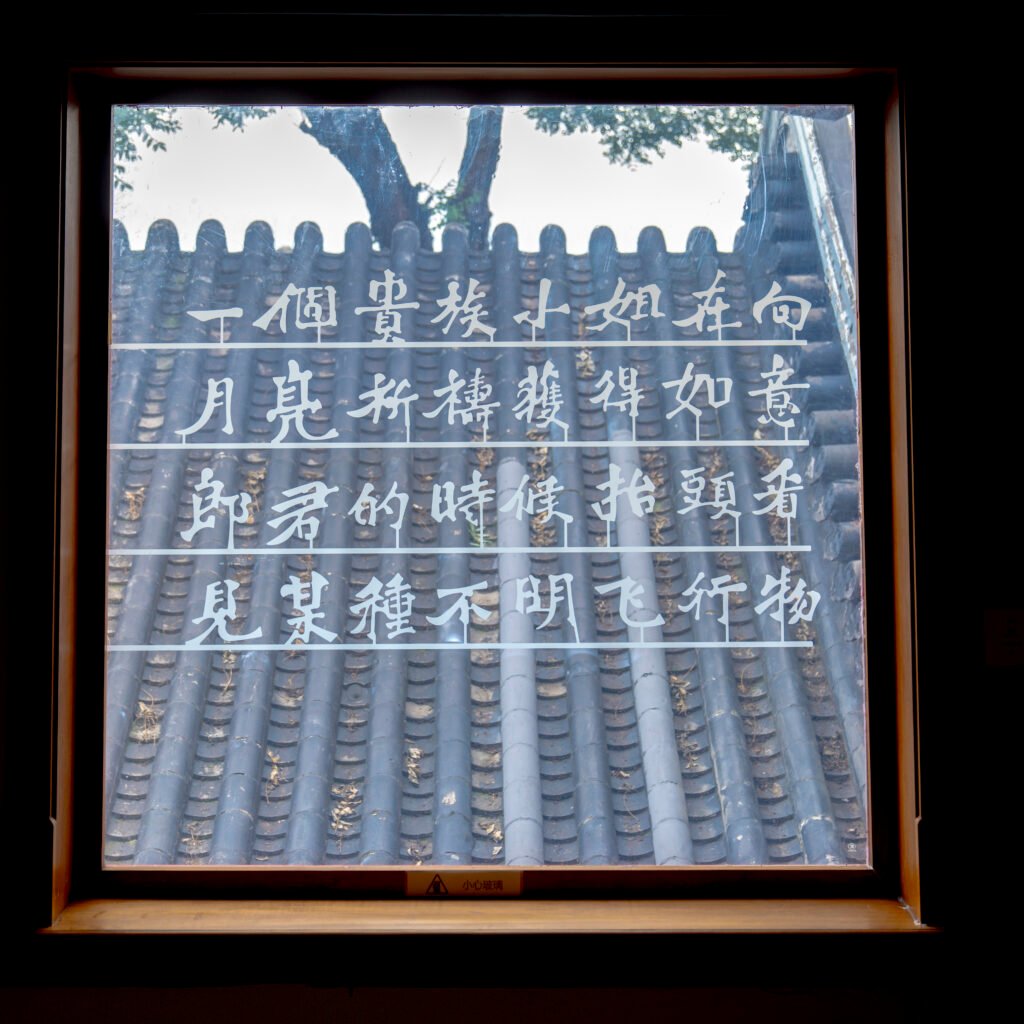
《月光》邱志杰
有时候,很多时候,惊喜是等待的收获
《月光》这块会变色的玻璃,通过电的传导,营造出“窗前月光”之景。未通电时,窗户处于磨砂状态,通电之后玻璃变成透明状态,玻璃上的文字就显示出来。户外窗景配上作品上的文字,给了一种无限想象的空间。在呼应展览主题“镜花水月”中“月”的同时,也在不断变幻间回应了“显”和“隐”的核心概念。配合玻璃,艺术家邱志杰在作品周边写了一句:“动物最不能理解的事物是玻璃”,以及哲人王与镜子的第四个故事。打开您手中的手电发现更多的故事。
Moonlight, this glass that appears to change color is conducted through electricity create a scene of ‘moonlight in front of the window’. When the power is not turned on, the scenery outside the window remains the same. The story begins to unfold, and after the power is turned on, it feels like night falls. Although the visual experience is out of reach, the story continues to unfold, flowing with imagination.
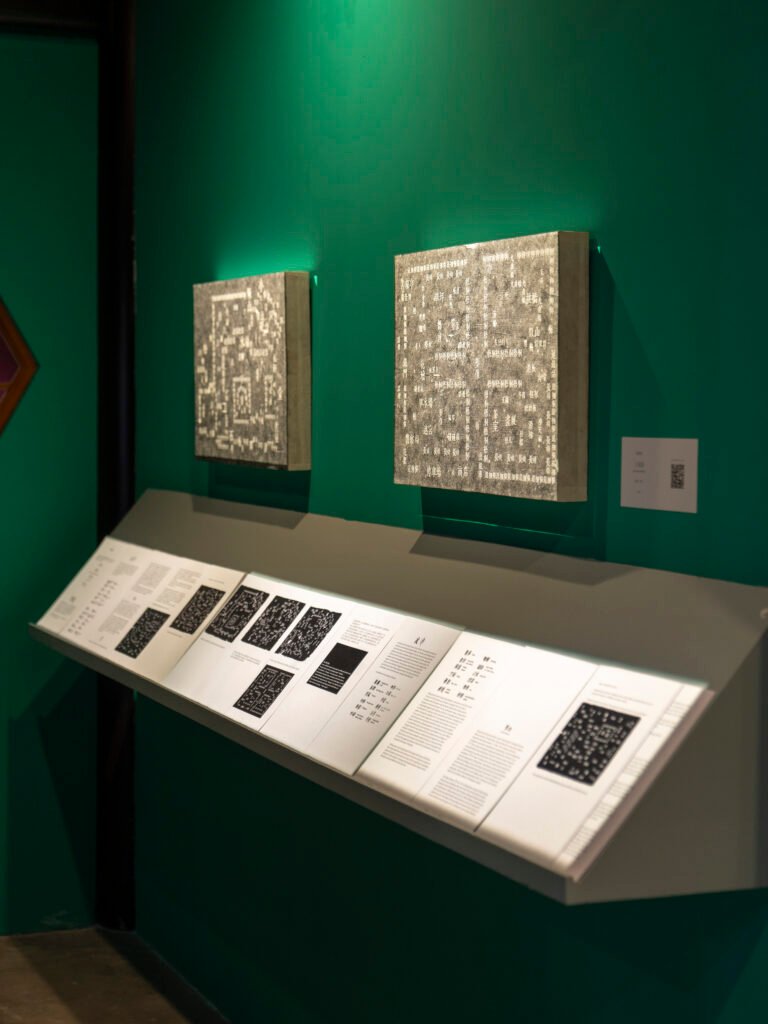
《七花园》邱志杰
是文字,是地图,是故事
《七花园》为一组拓片作品。缘起于2012年一本国外杂志Paesaggio的活动,要求所有参与的艺术家只用文字而不是用图画来表述风景和花园。在艺术家邱志杰看来,对于一个以中文为母语的人来说,这几乎是不可能的,因为作为使用至今的象形文字,大量的汉字本身就已经是一副图画。例如“花园”二字, 就形象地描绘出围墙、草木、园子和中心的一口池塘。中国传统艺术源自自然、贴近自然,用独特的表达方式透露出对自然的洞见。邱志杰利用这一特点,通过文字与图像的研究,用文字构成图片的形式想象并创作着花园中发生的故事。
“Seven Flower Garden ” is a set of rubbings. Originating from the event of Paesaggio, a foreign magazine in 2012, which required all the participating artists to use only words instead of pictures to depict landscapes and gardens. In the view of artist Qiu Zhijie, for a native Chinese speaker, this is almost impossible, because as pictographic characters that are still in use today, a large number of Chinese characters themselves are already a picture. For example, the word “flower garden” vividly depicts the walls, vegetation, garden, and a central pond. Chinese traditional art originates from nature and is close to nature, revealing insights into nature through unique expressions. Qiu Zhijie utilizes this characteristic to imagine and create stories happening in the garden through the study of text and images, using text to form images.
展览现场