关于展览
展出作品
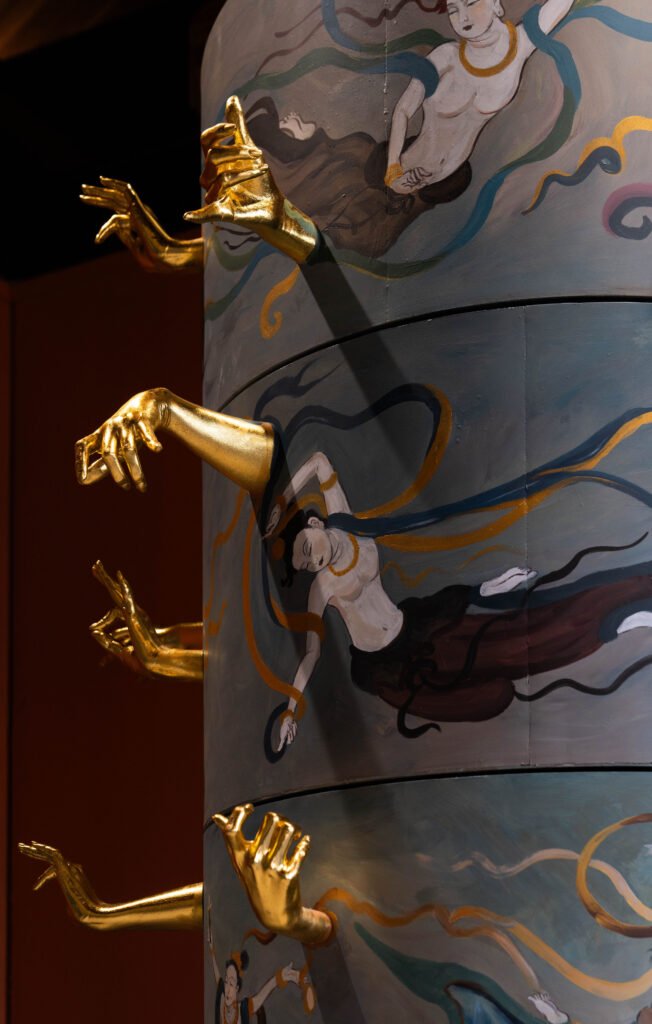
《转音千手》鲁艺冉
《转音千手》是一组以三层垂直转经筒为载体的动力交互雕塑。艺术家鲁艺冉从敦煌壁画中提取数种手势将其立体化贴与金箔,铸成一只只金手,错落嵌于简身。简表以矿物颜料多层罩染技法再现敦煌壁画剥落质感,飞天衣袂流转轨迹暗藏三兔共耳数学拓扑。每层内置不同共鸣材质,观众随机拔动金手时皆触发不可复现的声序组合,形成“人一音,千转干声”的独特体验。
Zhuanyin Qianshou “is a set of dynamic interactive sculptures with three layers of vertical prayer tubes as the carrier. Artist Lu Yiran extracted several gestures from Dunhuang murals and applied them in three dimensions onto gold foil, casting them into golden hands that were intricately embedded in the barrel.
The cylinder table uses the technique of multilayer mineral pigment overlay to reproduce the peeling texture of Dunhuang murals, and the flowing trajectory of the flying clothes hides the mathematical topology of the three rabbits sharing the same ear. Each layer is equipped with different resonant materials, and when the audience randomly flips the golden hand, it triggers an irreproducible sound sequence combination, forming a unique experience of “one person, one sound, a thousand turns and a thousand sounds”.
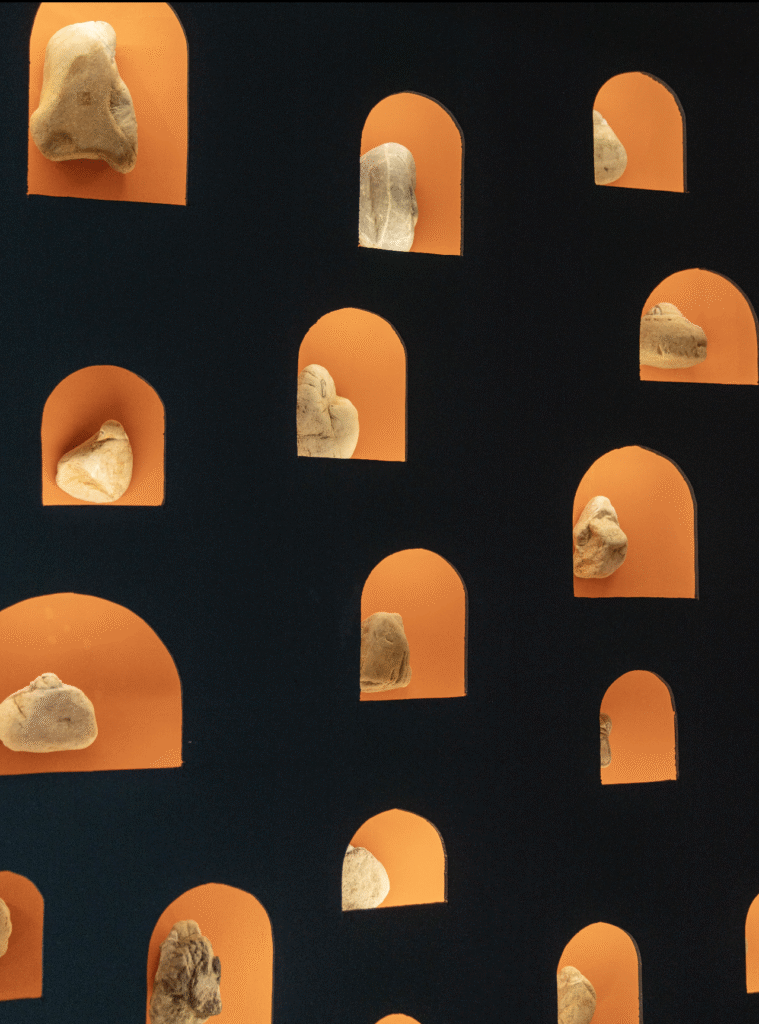
《面壁》宋墨
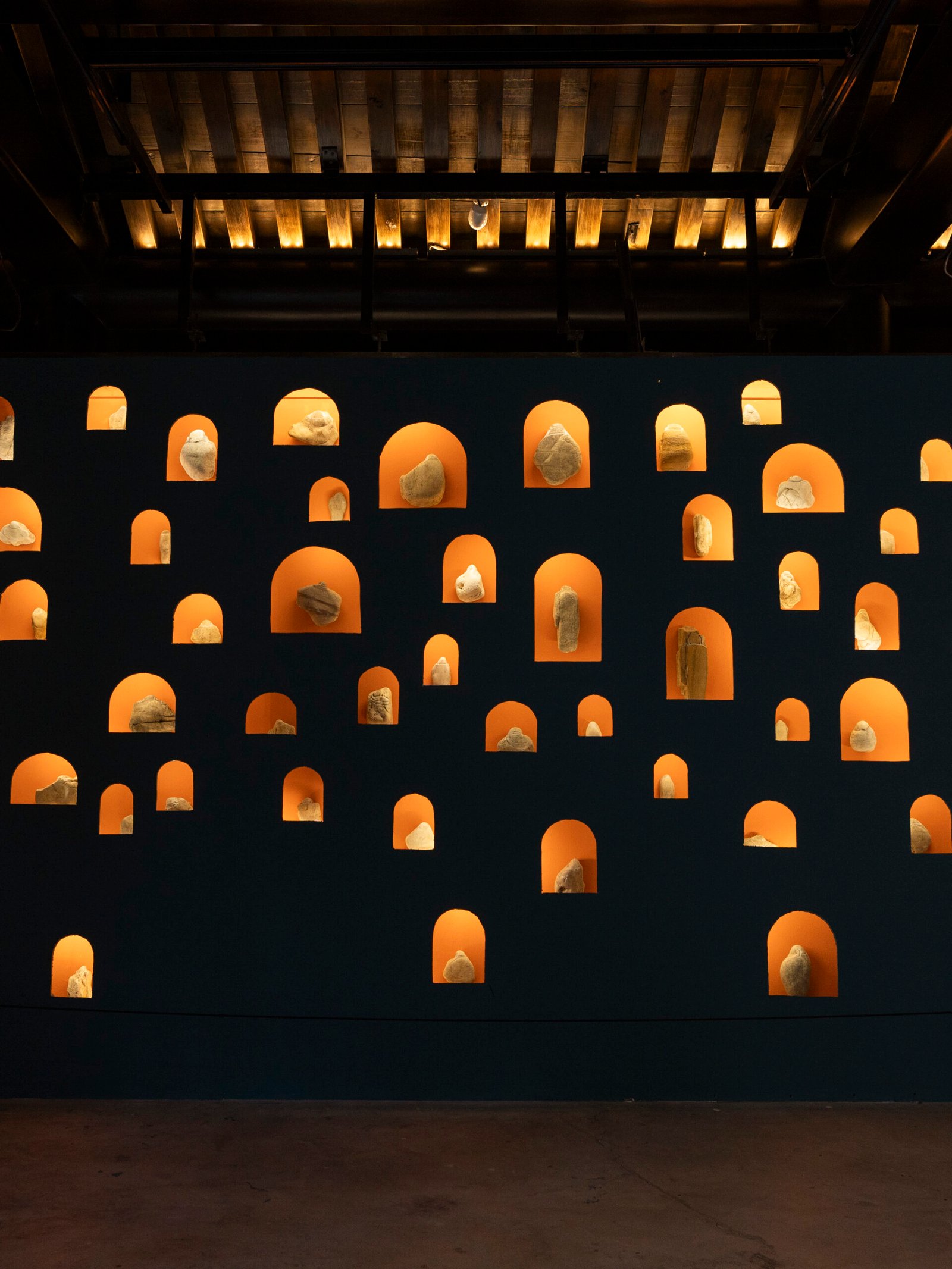
该展厅中的石像墙是艺术家宋墨的作品《面壁》。佛像通常面对信众,背对后墙,代表觉悟他人、宽容万象。
而在宋墨的创作中,佛像转向墙壁,以背示人,意在引发观者对内心世界的重新审视。宋墨以国画大写意的手法,寻觅与佛像形态相似的鹅卵石,并通过融合鹅卵石的自然形态、体块与线面的元素,使其发挥自然的力量。
The stone statue wall in this exhibition hall is the work “Face Wall” by artist Song Mo. Buddha statues usually face believers with their backs to the back wall, representing enlightenment towards others and tolerance towards all things.
In Song Mo’s works, the Buddha statue turns towards the wall to show its back to the viewer, intending to provoke a re examination of the inner world. Song Mo used the technique of freehand brushwork in traditional Chinese painting to search for pebbles that resemble the shape of Buddha statues, and by integrating the natural form, blocks, and elements of lines and surfaces of pebbles, they were able to exert their natural power.
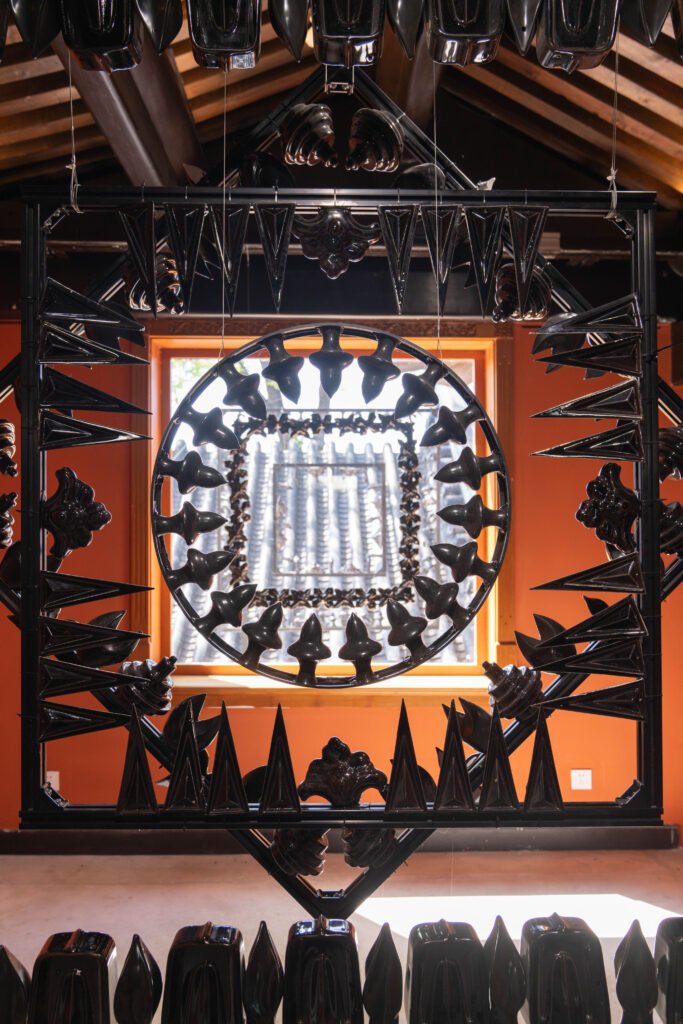
《造景 藻井2》潘悦
《造景 澡井2》取材于敦煌藻井的装饰图案,进行平面到立体再到空间的形态转化研究。藻井2是本系列的第二件作品,通过将敦煌藻井的元素进行提取整合,用泥塑的手法将平面的图案立体化,再烧制成陶瓷进行组装,形成空间的阵列,从作品的不同角度观看,依然保留藻井的构成方式,存有丰富关系的负空间,引入观者参与互动。
The second installment of “Zaojing Caijing 2” is based on the decorative patterns of Dunhuang Caijing, and conducts research on the transformation from flat to three-dimensional and then to spatial forms. Zao Jing 2 is the second work in this series, which extracts and integrates elements of Dunhuang Zao Jing, uses clay sculpture techniques to make flat patterns three-dimensional, and then burns them into ceramics for assembly, forming a spatial array.
From different perspectives of the work, the structure of the Zao Jing is still retained, and there is a negative space with rich relationships, introducing viewers to participate in interaction.
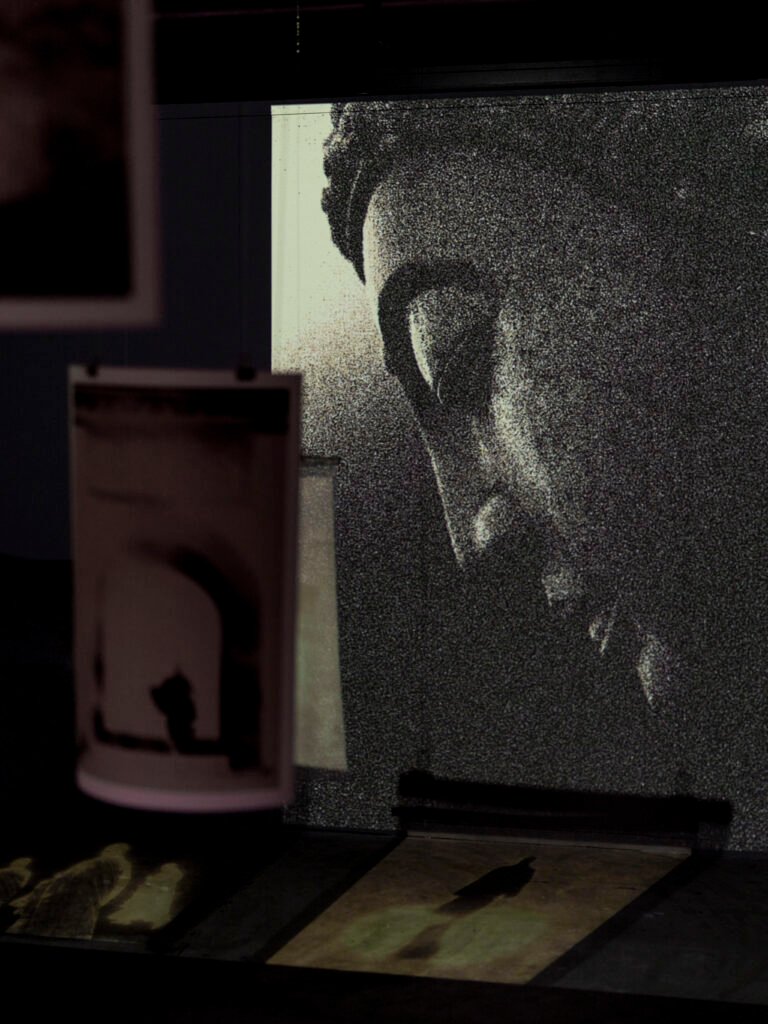
《礼佛》陈进瑞
“礼佛”是指以恭敬的心来表示对佛法僧三宝的尊敬和感恩。艺术家陈进瑞善于用摄影写诗,他花费十年时间用摄影写诗,以自由自在的状态迎接佛性的到来。艺术家说:“礼佛,礼心中之佛。我拍的不是佛教,而是佛性。
佛性藏在我们的心中。”
在展陈上,美术馆使用投影矩阵式布展来呈现艺术家摄影作品中独特的光影。
‘Worship Buddha’ refers to showing respect and gratitude towards the three treasures of Buddhism and monks with a respectful heart.
Artist Chen Jinrui is good at using photography to write poetry. He spent ten years using photography to write poetry, welcoming the arrival of Buddha nature in a free and unrestrained state. The artist said, “Worshiping Buddha, worshiping the Buddha in our hearts.
What I am photographing is not Buddhism, but Buddha nature. Buddha nature is hidden in our hearts.
At the exhibition, the art museum uses a projection matrix layout to present the unique light and shadow in the artist’s photographic works.
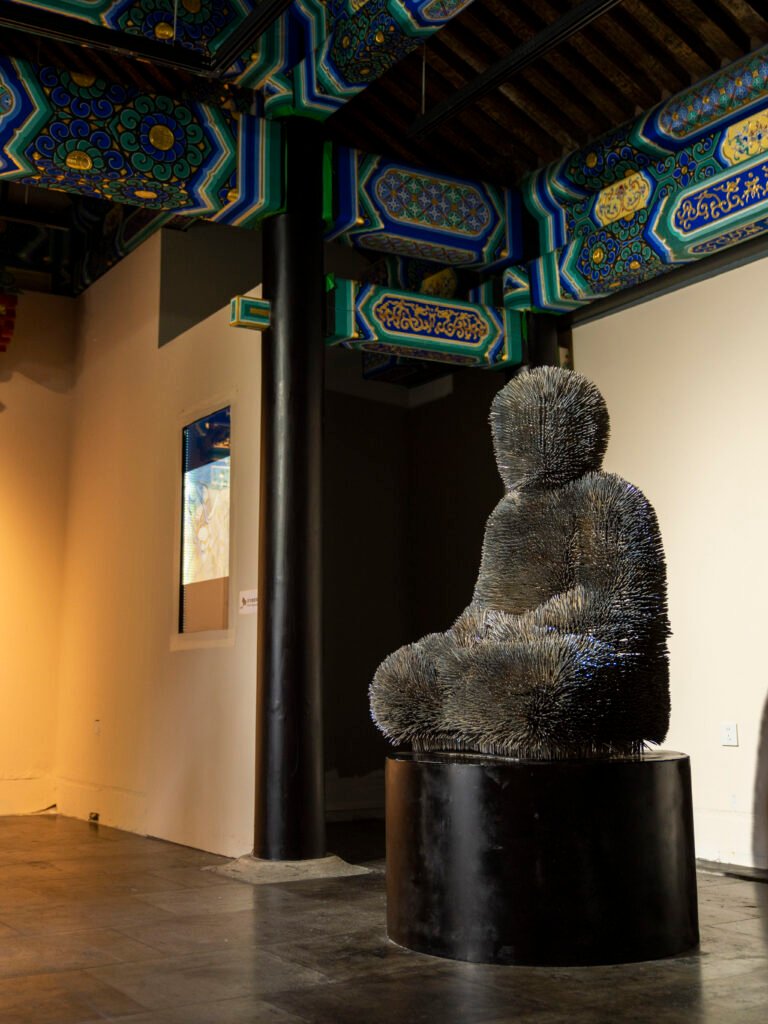
《苦修者》谢馨仪
您现在所处的是本次展览特别开放的展厅——西厅。我们以敦煌藏经洞为灵感打造成了这个展厅,展厅天花的色彩和花纹多源自洞窟藻井,由工匠手绘而成,由此开始南池子美术馆未来将开启一系列复原古剑建的艺术项目。
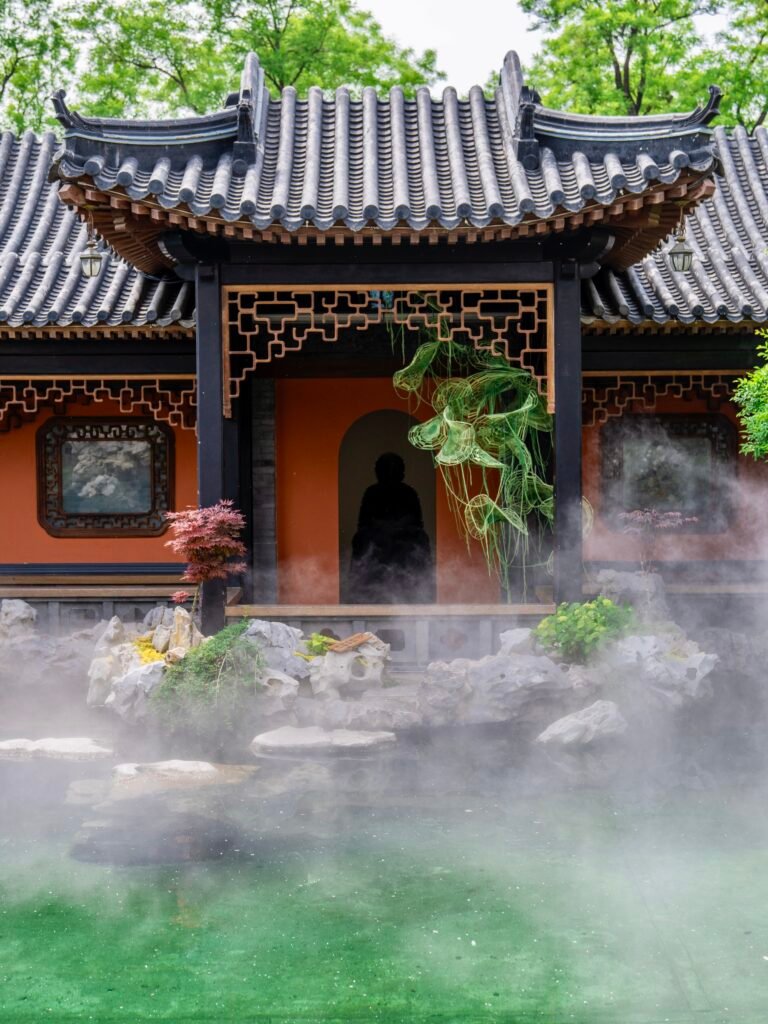
展厅正中的作品是艺术家谢馨仪创作的《苦修者》
—肉体的痛苦与精神的开悟具象化呈现。
作品的灵感来源于莫高窟第275窟的“毗竭梨王身钉千钉本生”壁画。毗竭梨王是一心寻求无上佛法,大护法天帝释为了考验他的求法之心,化作婆罗门来到王宫,要求国王以“身钉千钉”作为供养,才肯传授。国王毫不犹豫地答应,婆罗门用千根铁钉钉入国王的身体,国王忍受剧痛而不生悔恨,甚至发愿:“我今求法,不为己身,但愿众生皆得解脱。
最终,婆罗门感动于国王的赤诚,传授了正法。
《苦修者》这件作品,年轻的女艺术家用时三个月,每日工作10小时,3万多根钢钉,一根根亲手焊接,她将这个创作过程视为自己艺术生涯的一次
“苦修””。佛说,在《贤劫经》里说,人世间共有八万四干种烦恼、八万四干种法门,法门的意思是修行的过程和手段。苦修者端坐于南池子美术馆2025年开凿的《诸相非相》特展藏经洞中,他身上的每一根钉子,都映射着人性中的慈悲与坚韧。
You are currently in the specially opened exhibition hall of this exhibition – the West Hall. We have created this exhibition hall inspired by the Dunhuang scripture cave. The colors and patterns on the ceiling of the exhibition hall are mostly from the cave’s coffered ceiling, hand drawn by craftsmen. From this point on, the Nanchizi Art Museum will launch a series of art projects to restore ancient sword architecture in the future.
The artwork in the center of the exhibition hall is “The ascetic” created by artist Xie Xinyi – a concrete presentation of physical pain and spiritual enlightenment.
The inspiration for the work comes from the mural “Pi Ji Li Wang’s Body Nail Thousand Nails Born” in Cave 275 of Mogao Grottoes. King Pijili was wholeheartedly seeking the supreme Buddhist teachings. In order to test his desire for the Dharma, the Great Protector, the Heavenly Emperor, transformed into a Brahmin and came to the palace, demanding that the king offer him “a thousand body nails” as offerings before he was willing to teach. The king agreed without hesitation, and the Brahmin nailed a thousand iron nails into the king’s body. The king endured excruciating pain without regret, and even made a vow: “I seek the Dharma now, not for myself, hoping that all sentient beings will be liberated.” In the end, the Brahmin was moved by the king’s sincerity and taught him the Dharma.
The artwork ‘The ascetic’ was created by a young female artist who worked for three months, 10 hours a day, with over 30000 steel nails welded one by one by hand. She regarded this creative process as a ‘ascetic’ in her artistic career. Buddha said that in the “Sutra of Virtuous Calamity”, there are 84000 afflictions and 84000 Dharma methods in the world, and Dharma methods refer to the process and means of spiritual practice. The ascetic sits in the special exhibition scripture cave of “Non phase of All Things” excavated by the Nanchizi Art Museum in 2025. Every nail on his body reflects the compassion and resilience in human nature.
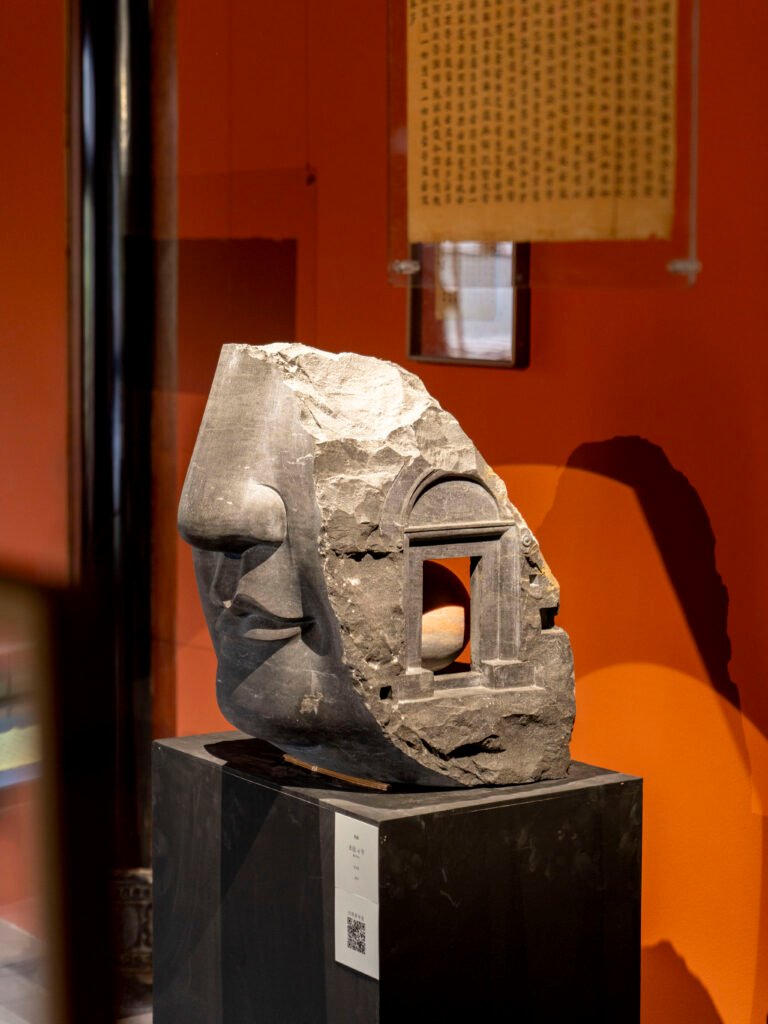
《寂-6号》阳新
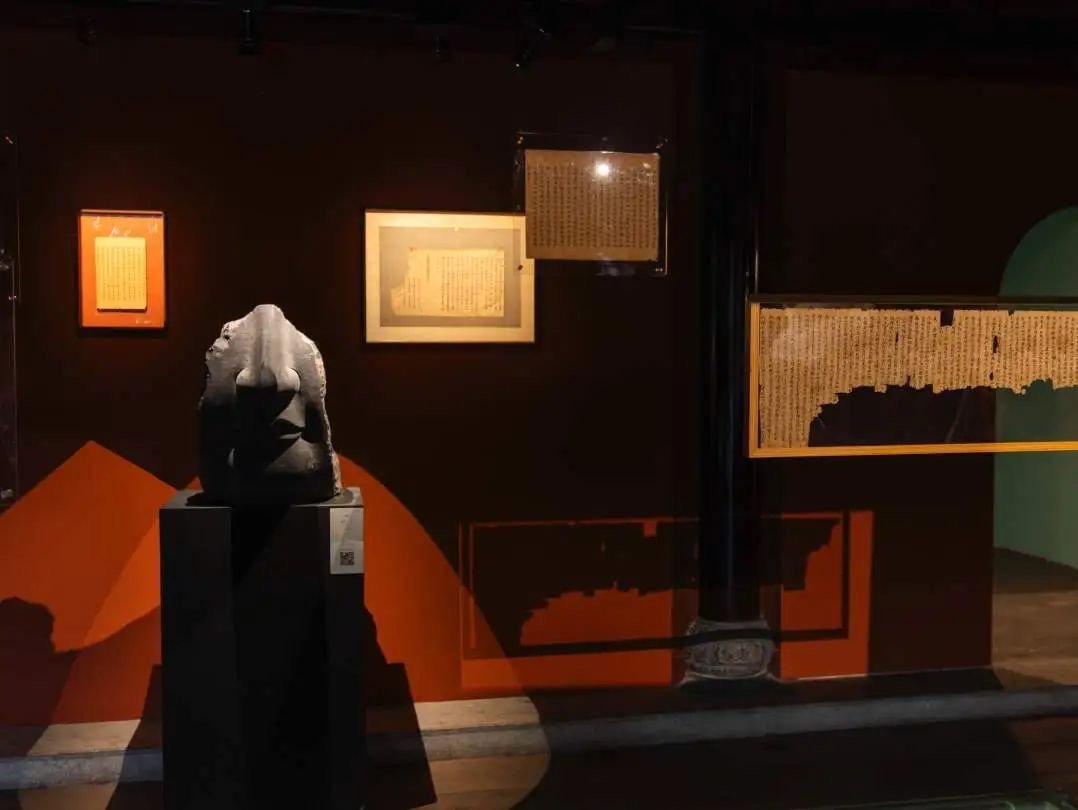
展厅中心的石像作品是艺术家阳新的《寂-6号》。
阳新认为:“中国文化里存在一种人与自然‘天人合一’的状态,重视生命个体平静、善良、包容的美好心境,而这种纯粹的美感通过怎样的形式表达出来非常重要。中国古代造像做到了这种形式和内容的完美结合,极具中国的哲学思辨。”
The stone sculpture at the center of the exhibition hall is Silence No. 6 by artist Yang Xin. The artist believes that “Chinese culture embodies a state of harmony between humans and nature—a unity of Heaven and humanity. It values a serene, kind, and compassionate state of mind in the individual. The way such pure beauty is expressed through form is of great importance. Ancient Chinese sculptures achieved a perfect union of form and meaning, deeply imbued with Chinese philosophical thought.”
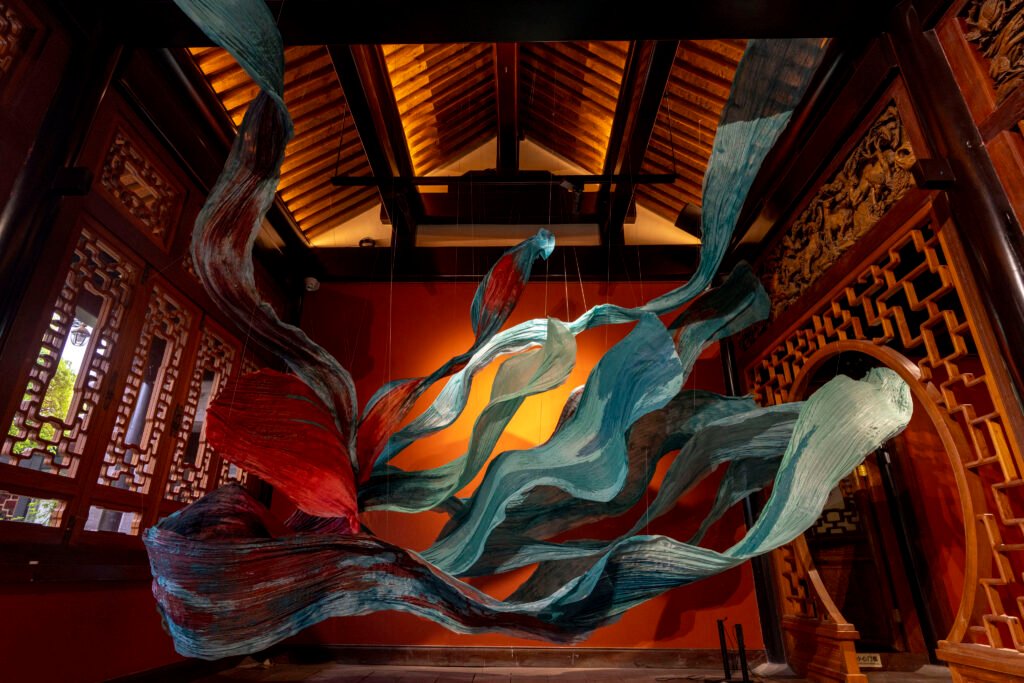
《丝脉》胡约华
《丝脉》以敦煌为精神原点,通过抽象的语言解构流动的生命意象,在真丝的呼吸感中重构丝路文明的当代叙事。作品试图超越具体的壁画图像叙事,以材质本身的流动性与观众互动,进而去捕捉敦煌艺术中最为本质的流动基因——那些在飞天衣袂间游走的线条,在矿物颜料中沉淀的时间,在丝绸之路中传递的生命力。手工染制的真丝以不可复制的偶然性承载时间,作品提取敦煌色谱中的绛红、青金石蓝与沙褐,通过当代染色工艺让这些颜色在丝绸上重新呼吸,那些矿物在纤维间自然晕染,形成如壁画剥落般的肌理层次。
Silk Pulse takes Dunhuang as its spiritual point of origin, using abstract visual language to deconstruct flowing life imagery and reconstruct a contemporary narrative of Silk Road civilization through the breath-like quality of real silk. Rather than depicting specific mural scenes, the work engages with the viewer through the fluidity of the material itself, seeking to capture the essence of movement that defines Dunhuang art— the lines that dance between the flying celestial robes, the time sedimented in mineral pigments, and the vitality carried along the Silk Road.
Hand-dyed silk, marked by its unrepeatable spontaneity, becomes a vessel of time. The piece draws from the Dunhuang color palette deep crimson, lapis lazuli blue, and sandy brown, and reawakens these hues through contemporary dyeing techniques. The minerals naturally diffuse within the silk fibers, forming layered textures that echo the weathered surface of ancient murals.
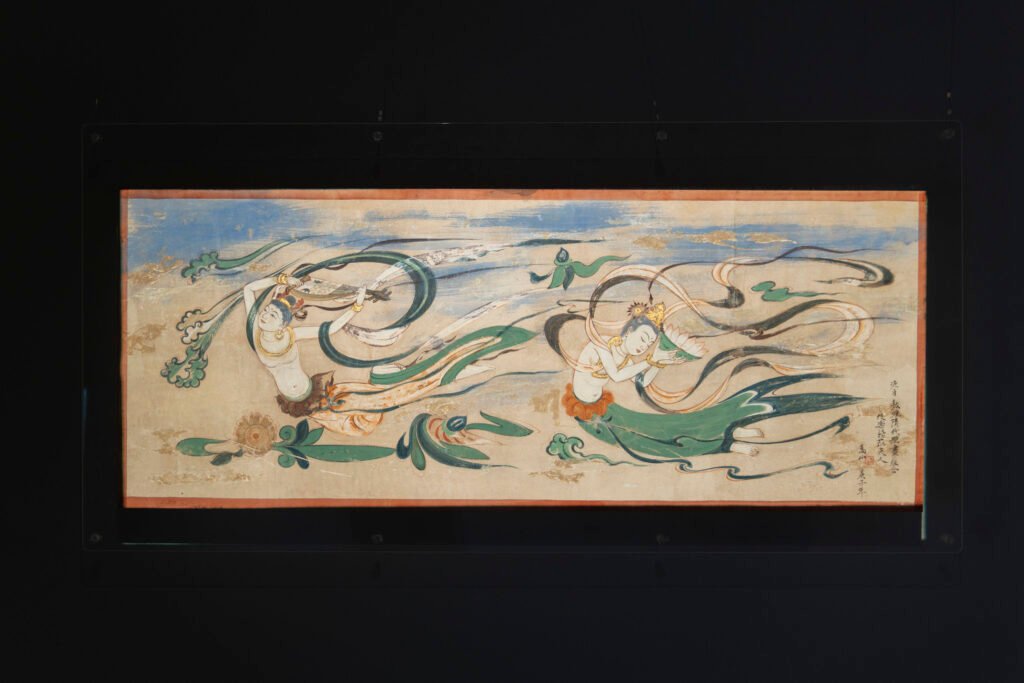
《伎乐持花飞天》高山
《伎乐持花飞天》展现了佛教中歌舞乐神的神性。持乐器的飞天称为“伎乐飞天”。画中的音乐意象,不仅让原本静止的画面富有动感和表现力,还彰显了敦煌艺术中诗、乐、舞的融合。隋代飞天造型奇特,色彩绚丽。人物形象多为中原风格:或面容修长,或形体丰腴,神态妩媚。其服饰也深受中原服饰的影响,裙摆多为三角纹或旗纹。隋代飞天为唐代完全中国化的飞天艺术奠定了基础。
The play ‘Ji Le Ji Hua Fei Tian’ showcases the divinity of the gods of dance and music in Buddhism. The flying celestial holding musical instruments is called ‘Ji Yue Fei Tian’. The musical imagery in the painting not only adds dynamism and expressiveness to the originally static image, but also highlights the fusion of poetry, music, and dance in Dunhuang art. The flying celestial bodies of the Sui Dynasty had unique shapes and brilliant colors. The character images are mostly in the style of the Central Plains: either with slender faces, plump bodies, and charming expressions. Their clothing is also deeply influenced by the clothing of the Central Plains, with skirts mostly featuring triangular or flag patterns. The Flying Apsaras of the Sui Dynasty laid the foundation for the fully localized flying art of the Tang Dynasty.
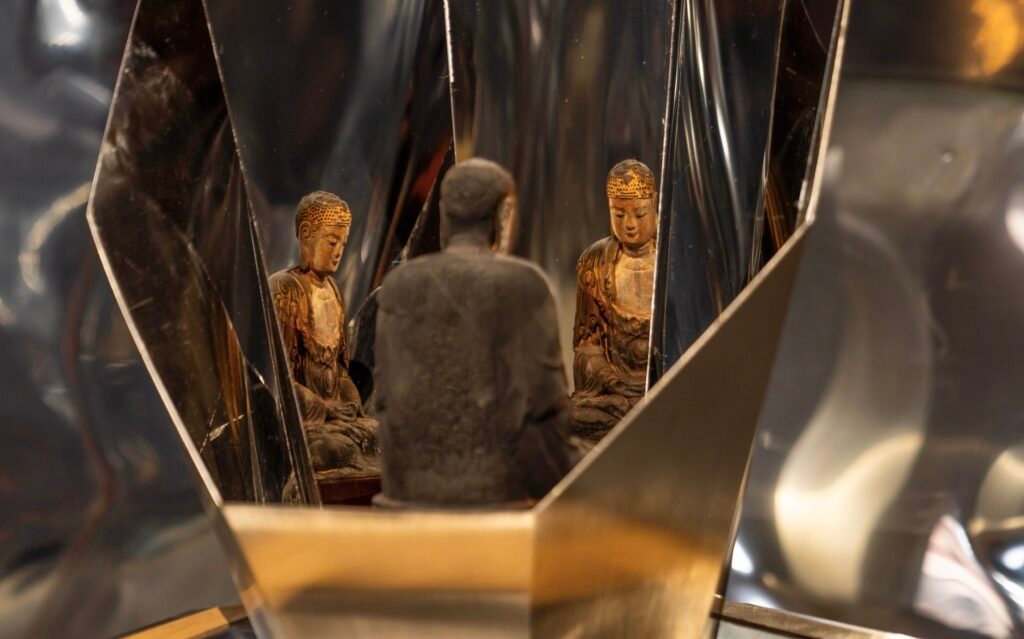
《摩耶镜中观》冯梓烜
佛窟中的八棱镜装置,是冯梓烜的作品《摩耶镜中观》,装置内部烧焦的佛像身体是“诸行无常”的现世注脚——破除人们对“永恒佛性”的实体化执念。八棱镜筒的设置则暗合佛教“一切现象如镜中像”的隐喻:观者追逐镜中连环幻影(佛的正面),恰如众生将缘起法误认为实有。而真相是——佛像的“完整正面”从未存在,它只是因缘聚合的镜像幻影。佛像背对众生,唯有放弃对“可见佛面”的执着,方能在镜筒摩耶中跳脱“无明”境遇。
The octagonal prism device in the Buddhist cave is a work by Feng Zixuan called “Maya Mirror View”
The burnt Buddha statue body inside the device is a footnote to the impermanence of all actions in the present world – breaking people’s obsession with the materialization of the “eternal Buddha nature”.
The setting of the octagonal tube is in line with the Buddhist metaphor of “all phenomena are like images in a mirror”: the viewer pursues a series of illusions in the mirror (the front of the Buddha), just as sentient beings mistake the method of dependent origination for reality. And the truth is – the
‘complete frontal view’ of the Buddha statue never existed, it was just a mirror illusion of the convergence of cause and effect. Buddha statues face away from sentient beings, and only by giving up their attachment to the “visible Buddha face” can they escape from the situation of “ignorance” in the lens of the Maya.
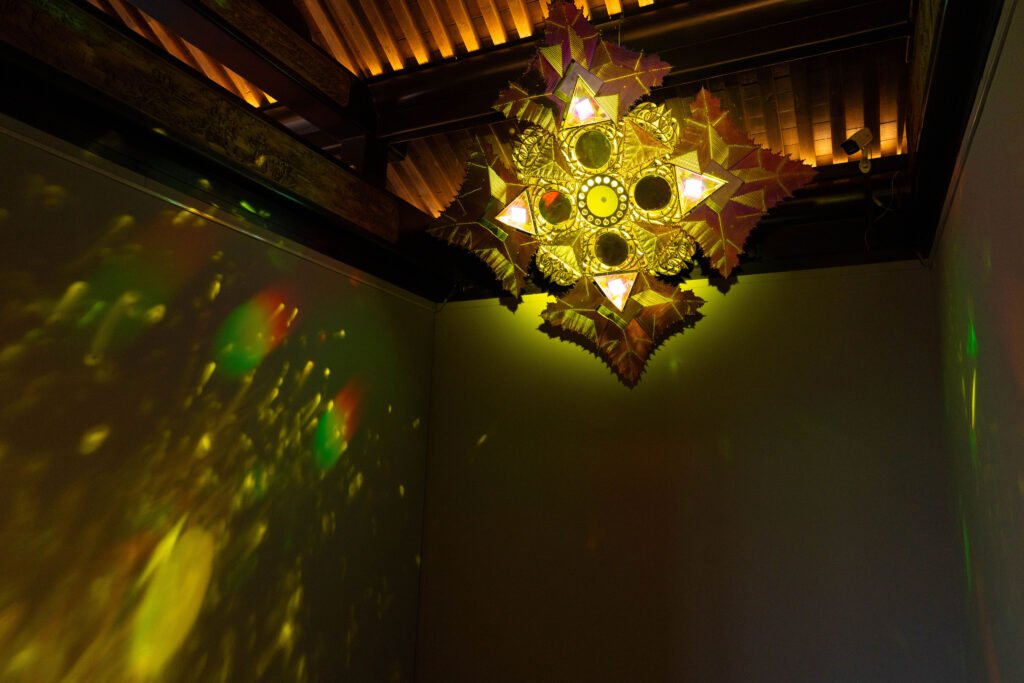
《天宇》王浩
《天宇》构架源于古代建筑藻井,出现在中国古代建筑宫殿上方,由细密的斗拱榫卯组成,只在尊贵的建筑中使用。象征着天宇具有“从人间通向天庭”的神圣意义。
藻井的形式有四方八方,圆形等,构造复杂。有的藻井各层之间使用斗拱,雕刻精致;有的藻井则不用斗拱,而以木板层层叠落,藻井的造型上圆下方,正符合中国古代“天圆地方”的宇宙观。因此,藻井就有了象征“天”的意味,就像西方教堂建筑中的穹窿顶代表天一样。
The framework of Tianyu originates from the caisson of ancient architecture, which appears above the palaces of ancient Chinese architecture. It is composed of fine arch of wooden architecture mortises and tenons, and is only used in noble buildings. Symbolizing the sacred significance of the universe as’ leading from the human world to the heavenly court .
The forms of cofferdams include square, octagonal, circular, etc., with complex structures. Some caissons use arch of wooden architecture between layers, which are exquisitely carved; Some caissons do not use arch of wooden architecture, but are stacked with wooden boards layer by layer. The shape of the caisson is round above and below, just in line with the ancient Chinese cosmology of “round sky and place”. Therefore, the coffered ceiling has a symbolic meaning of “heaven” just like the dome top in Western church architecture represents heaven.
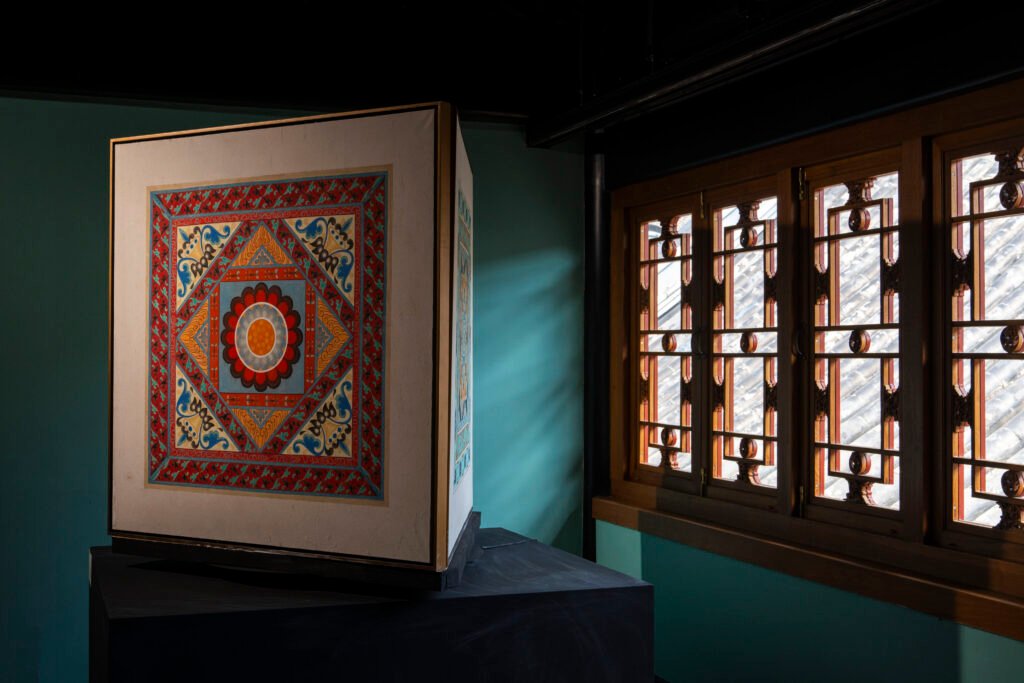
《藻井 系列》牛玉生
《386窟莲花水纹藻井》
古代建筑因多为木质结构,易引起火灾,故藻井表面多绘以莲花等水生植物,取五行学说中的“水克火”之意。
这幅藻井边缘的帷幔绘制出了新的纹样,中层连珠纹以一整二半的连续形式呈现,四个外角上的莲花设计得别出心裁,整幅图案呈现出新纹饰与新色彩的和谐统—。
《249窟忍冬莲花平樣》
这是一幅规整的中心对称图案,其中外岔角上大面积的黄底色和青色忍冬式荷叶,在当时有引领时代的感觉。
早期的平棋图案,因洞窟的形制和面积所限,画师们在创作时,色彩和纹饰往往不能相应地对称。而此幅平棋则严格地按照图案学的对称原则绘制,为以后大型藻井的创作奠定了基础。
《唐代团花藻井之二》
盛唐时期的团花藻井纹饰结构繁复,发展到了饱和状态,呈现出严谨、庄严、完整的秩序感。
386 Cave Lotus Water Pattern Seaweed Well
Due to the fact that ancient buildings were mostly made of wooden structures, they were prone to fires. Therefore, the surface of the coffered ceiling was often painted with aquatic plants such as lotus flowers, taking the meaning of “water restrains fire” in the Five Elements theory. The curtain at the edge of this coffered ceiling has been painted with a new pattern, with a continuous bead pattern in the middle layer presented in a whole and a half form, and lotus flowers on the four outer corners designed creatively. The entire pattern presents a harmonious unity of new patterns and colors.
249 Caves of Honeysuckle Lotus Plain
This is a regular center symmetrical pattern, with large areas of yellow background and green honeysuckle style lotus leaves on the outer corners, which had a leading feeling of the times at that time. Early flat chess patterns, due to the shape and size of caves, were often created by artists with colors and patterns that were not symmetrical. And this flat chess piece was strictly drawn according to the principle of symmetry in pattern theory, laying the foundation for the creation of large-scale cofferdams in the future.
Tang Dynasty Tuanhua Caijing II
During the prosperous Tang Dynasty, the intricate structure of the floral coffered ceiling patterns developed to a saturation point, presenting a rigorous, solemn, and complete sense of order.
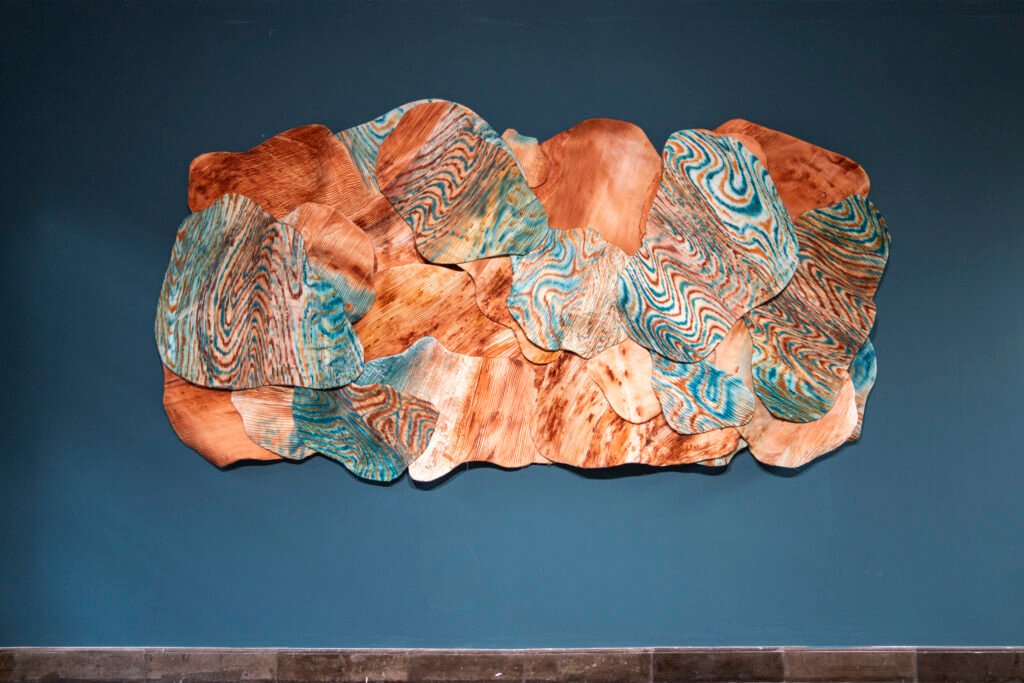
《混沌·经纬》胡约华
《混沌•经纬》灵感源自敦煌遗书《天地开辟经》中“混沌初分,气凝为界”的宇宙观,以丝绸的流动与褶皱象征天地初开时的无形之力。装置通过分割、叠加的丝绸片层,结合压褶肌理构建“天”与“地”的意象,天地非二元对立,而是同一物质的不同形态。赭、泥、青,三色晕染交融,流动与凝固,以混沌之感模糊边界。
The inspiration for “Chaos: Longitude and Latitude” comes from the cosmology in the Dunhuang suicide book “The Sutra of the Opening of Heaven and Earth”, which states that “chaos first separates and air condenses as the boundary”. The flow and folds of silk symbolize the intangible power of the opening of heaven and earth. The device constructs the imagery of “heaven” and “earth” by dividing and stacking silk layers, combined with folded textures. Heaven and earth are not binary opposites, but different forms of the same substance. The three colors of ochre, mud, and green blend together, flowing and solidifying, blurring the boundaries with a sense of chaos.
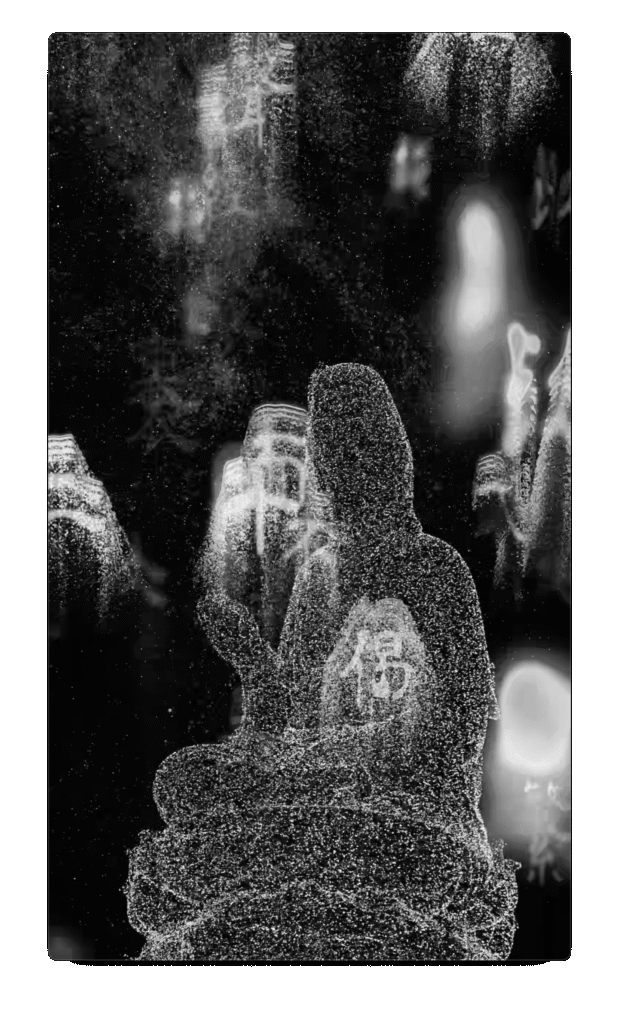
《尘尘非是》李寒轩
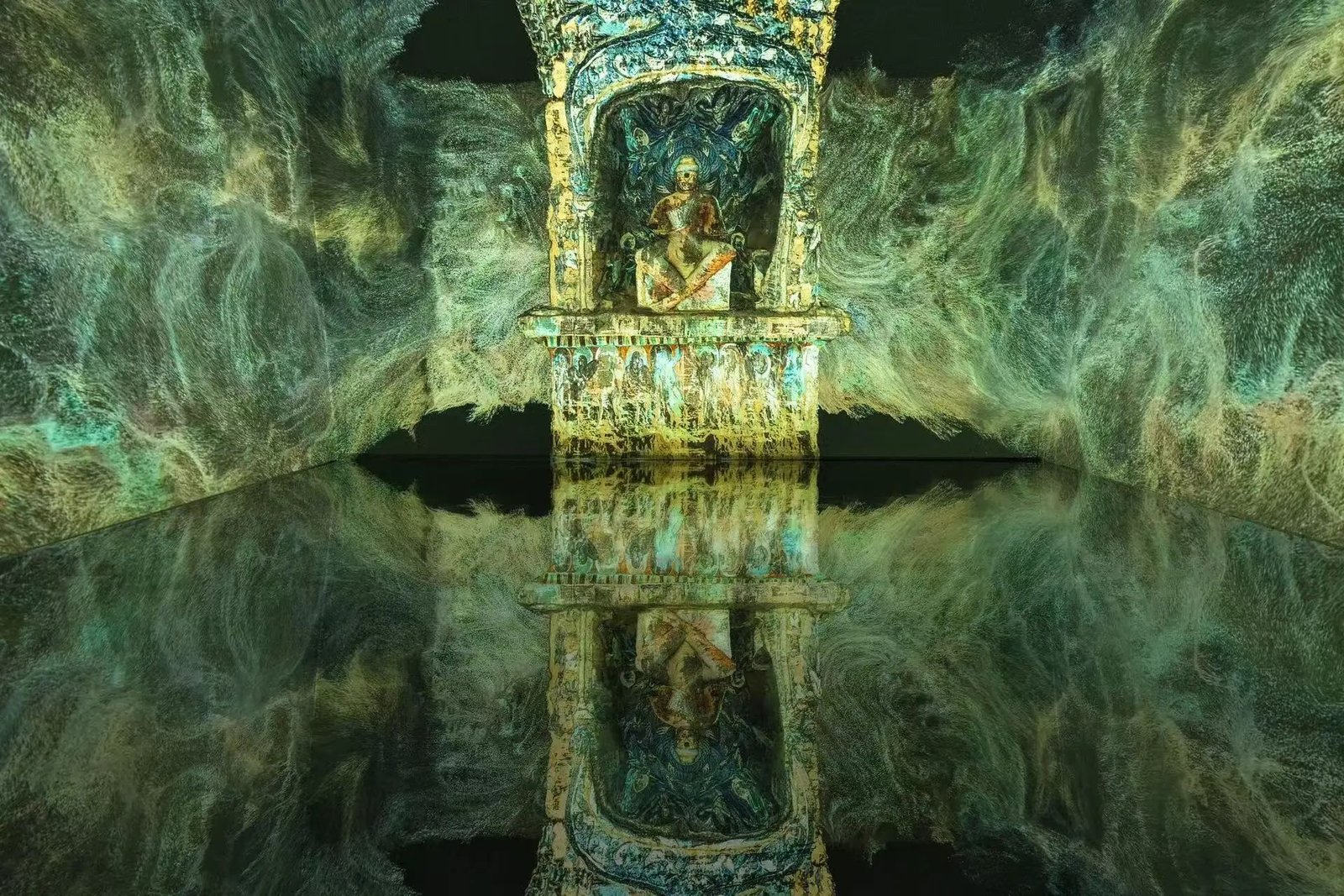
本作品以数字影像为媒介,运用粒子化生成技术模拟尘埃、沙土与光粒,重构敦煌佛像的视觉形态。
作品融合了以沙砾般微粒呈现的经文,文本选自
《金刚经》中“法身非相”章节,寓意佛之法身超越有形之相,深刻诠释“万法皆空”的佛学真谛。敦煌作为大漠中的文化遗产,作品特意采用粒子流变的处理方式,将佛像解构为无数沙砾般的微粒,象征黄沙流转与时空变迁,借以映照历史流变与个体生命的渺小。尽管尘世万象终将湮灭,然经典智慧恒久不息,于时光深处绵延不绝。
This work employs digital video as its medium, using particle-based generative technology to simulate dust, sand, and light particles, thereby reconstructing the visual form of Dunhuang Buddhist statues. The piece integrates scripture from the Diamond Sutra, specifically the passage on the “formless Dharma body,” rendered in granular, sand-like particles. This symbolizes the transcendence of the Buddha’s Dharma body beyond physical appearance, profoundly expressing the Buddhist truth that “all phenomena are empty.” Set against the backdrop of Dunhuang, a cultural relic in the vast desert, the work deliberately applies a fluid particle treatment to deconstruct the statues into countless sand-like particles, evoring drifting sands and the passage of time and space, thus reflecting the flux of history and the insignificance of individual existence. Though all worldly forms eventually fade, the wisdom of the sutras endures endlessly flowing through the depths of time.
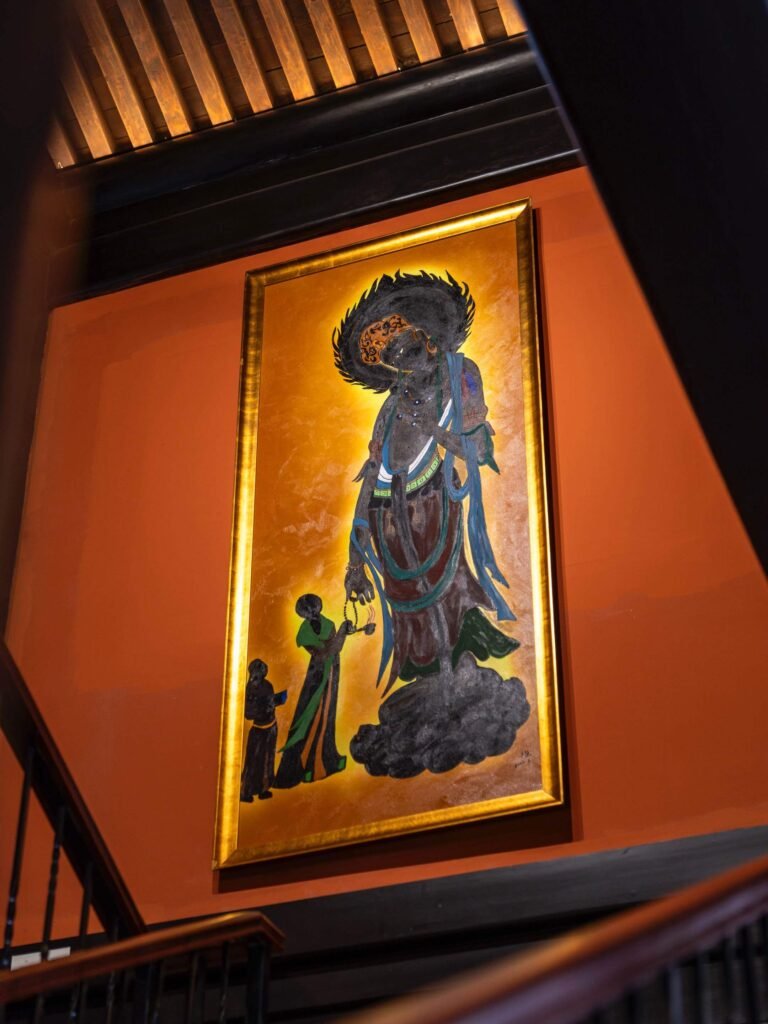
《观音与女性》宁强
观音菩萨的形象在不同文化中经历了性别角色的转变。
在南亚地区,观音常以孔武有力的男性形象出现,展现佛教的无所不能与威严。然而,当观音进入中国后,它与本土的神话传说中的女性角色,如西王母和道教仙女相融合,逐渐塑造出了富有女性特质的神圣形象。特别是在武则天登基称帝后,女性的权力形象在社会上得到了更加广泛的认同,这种变化也促使观音菩萨的形象从男性转化为女性。
The image of Guanyin Bodhisattva has undergone gender role changes in different cultures. In South Asia, Guanyin often appears in the form of a powerful male figure, showcasing the omnipotence and majesty of Buddhism. However, when Guanyin entered China, it merged with female characters in local myths and legends, such as the Queen Mother of the West and Taoist fairies, gradually shaping a sacred image rich in feminine traits.
Especially after Empress Wu Zetian ascended the throne and declared herself emperor, the image of women’s power gained wider recognition in society, and this change also led to the transformation of the image of Guanyin Bodhisattva from male to female.
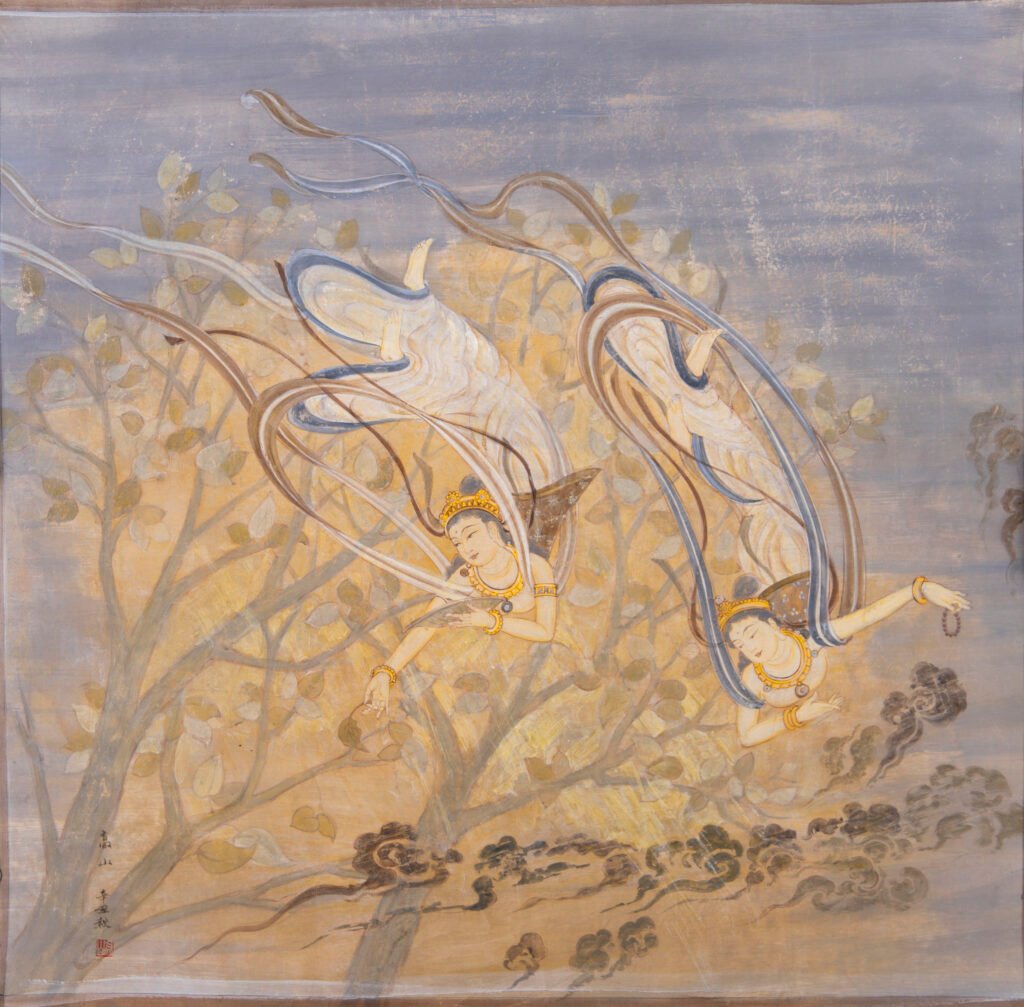
《树前飞天》高山
《树前飞天》描绘了唐代时期的敦煌飞天,在这一时期,飞天已完全“中国化”,达到了最完美的状态,成为了真正意义上的‘东方乐舞飞天美神’。唐代大诗人李白曾咏赞敦煌飞天:“素手把芙蓉,虚步蹑太空。霓裳曳广带,飘浮升天行。”此幅作品原型来自敦煌壁画中著名的菩提树双飞天,位于莫高窟第321窟西壁龛顶,高山用岩彩画的方式临摹,飞天缓缓而下,祥云漂浮,栩栩如生,还原了壁画的质感。
The painting ‘Flying Apsaras in front of the Tree’ depicts the Dunhuang Flying Apsaras during the Tang Dynasty. During this period, Flying Apsaras had fully ‘Sinicized’ and reached the most perfect state, becoming the true
‘Oriental Music and Dance Flying Apsaras Beauty God’. The great Tang Dynasty poet Li Bai once praised the Dunhuang Flying Apsaras, saying, “With bare hands, I hold the hibiscus, and step into space in a virtual manner. With a wide belt of raincoats, I float and ascend to the sky.” This artwork is based on the famous Bodhi Tree Double Flying Apsaras in Dunhuang murals, located on the top of the western niche of Cave 321 in the Mogao Grottoes. The high mountains are imitated in the style of rock paintings, and the flying Apsaras slowly descend, with auspicious clouds floating and lifelike, restoring the texture of the murals.
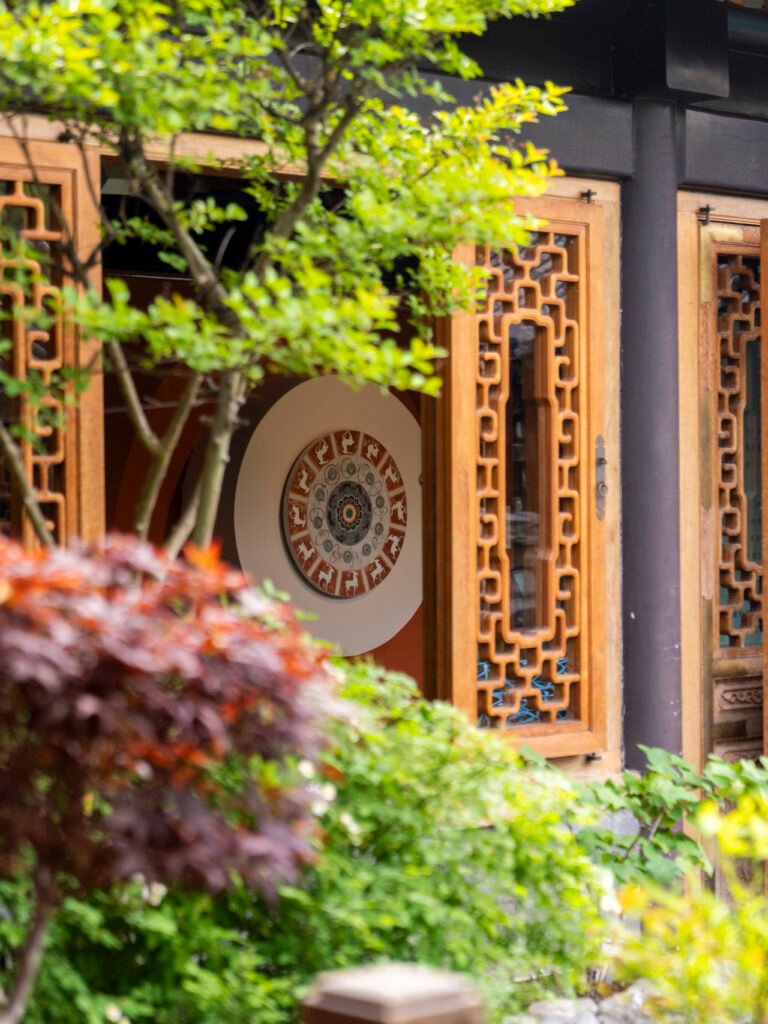
《旋相·经变》王宁
这件作品是艺术家王宁的《旋相.经变》,是以敦煌经变画为创作主题与元素的费纳奇镜动画装置作品,作品融合敦煌经变画中的经典元素,如飞天、乐手、五色鹿、莲花与辅助装饰纹样,呈现出具有东方神韵的动态视觉体验。在岩彩技法的运用上,采用天然矿物颜料层层叠加,通过研磨、调胶、蛤粉等传统工艺,使色彩呈现出丰富的颗粒感与金属光泽,利用金箔与红绿岩彩的碰撞,突出了敦煌壁画历经千年仍熠熠生辉的质感。借助费纳奇镜的视觉暂留原理,将静态图像转化为流动的画面,使观者在观看过程中仿佛亲历一场跨越时空的宗教仪式与精神旅程。画面中飞天环绕、五色鹿奔腾,构筑出一个寓意轮回、生生不息的图景。
This artwork, titled Rotating Phase:
Transfiguration, is by artist Wang Ning. It is a phenakistoscope animation installation inspired by and incorporating elements from Dunhuang transformation paintings (jingbian). The piece integrates iconic motifs from these ancient artworks such as celestial beings (Feitian), musicians, the five-colored deer, lotus flowers, and ornamental patterns creating a dynamic visual experience imbued with Eastern spiritual aesthetics.
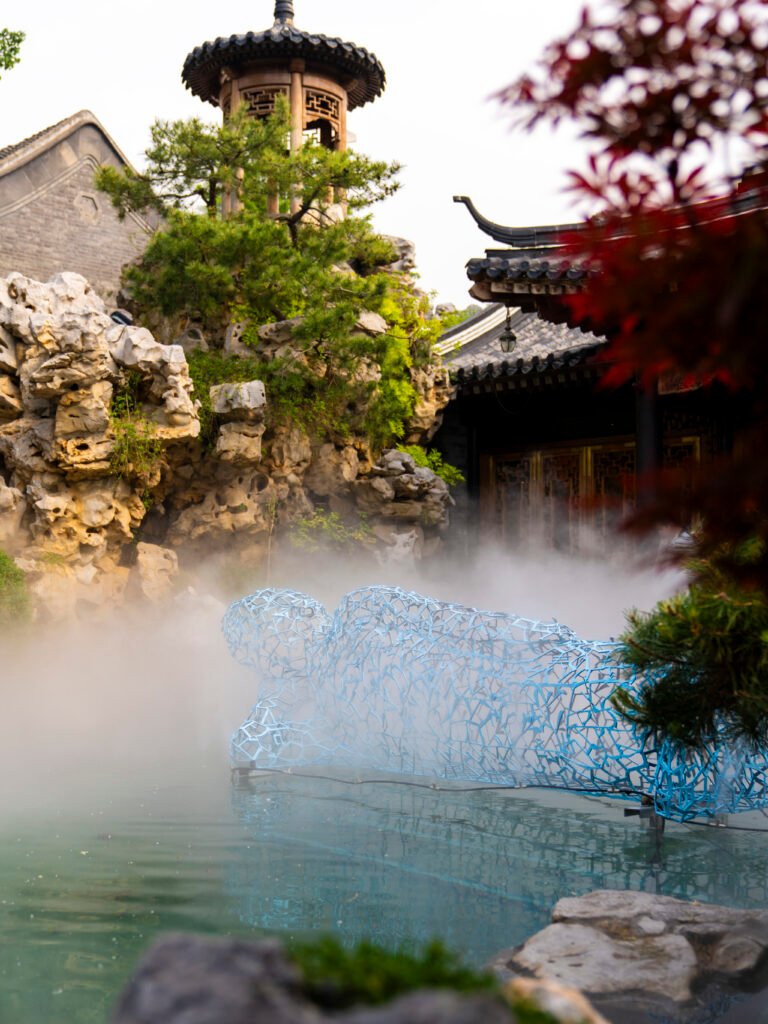
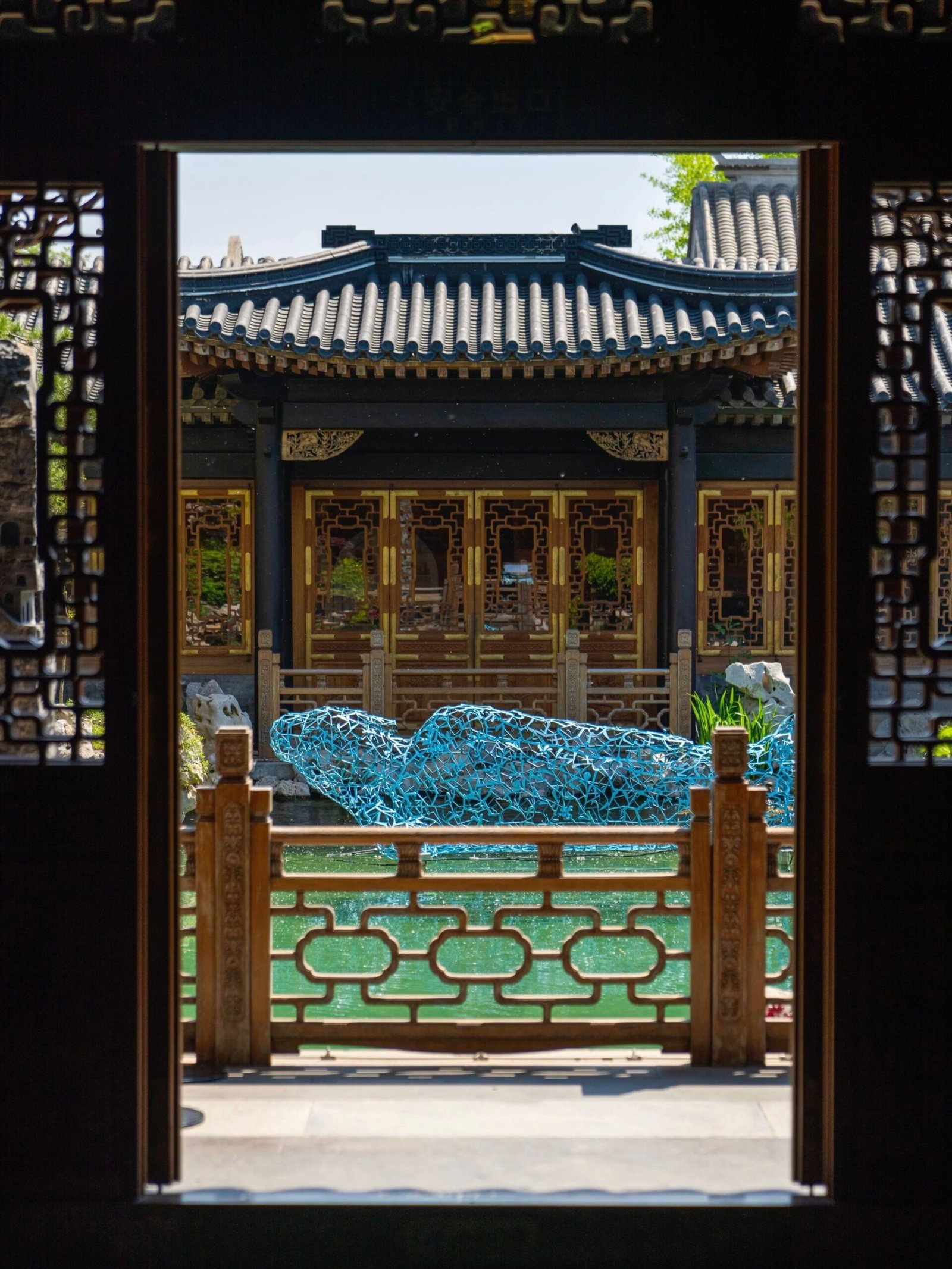
《无上智者》胡军军
《无上智者》原位于智者纪念堂院落,因而得名。这尊卧佛的材质源自湖北玉泉寺墙体改造时刻镂后遗留的经文钢条,文字内容节选自《维摩诘经》,共计5000余字。胡军军将这些零散的钢条焊接重组,使之化身为涅槃佛像,这不仅是对废弃材料的再生利用,更寓意着涅槃的重生与超越。在胡军军看来,涅槃像是释迦牟尼佛展现的极致慈悲,是对世间至深、至大的爱。他向人们传递着“万事万物不生不灭,常乐我净”的智慧。在光影交错间,这座卧佛静静诉说着千年不变的禅意。
The Supreme Sage was originally located in the courtyard of the Sage Memorial Hall, from which it takes its name. This reclining Buddha sculpture is made from steel strips bearing Buddhist scriptures, salvaged during the renovation of the walls of Yuquan Temple in Hubei. The inscriptions, totaling over 5,000 characters, are excerpts from the Vimalakirti Sutra.
Artist Hu Junjun welded and reassembled these scattered steel fragments into a Nirvana Buddha figure. This act is not only a creative reuse of discarded materials, but also a powerful metaphor for rebirth and transcendence through nirvana. In Hu’s view, the Nirvana image represents the ultimate compassion of Shakyamuni Buddhaa profound and boundless love for all beings. It conveys the Buddhist wisdom that “all things are neither born nor destroyed, and in their essence are constant, joyful, pure, and selfless.”
Bathed in shifting light and shadow, the reclining Buddha silently conveys a timeless sense of Zen across the ages.
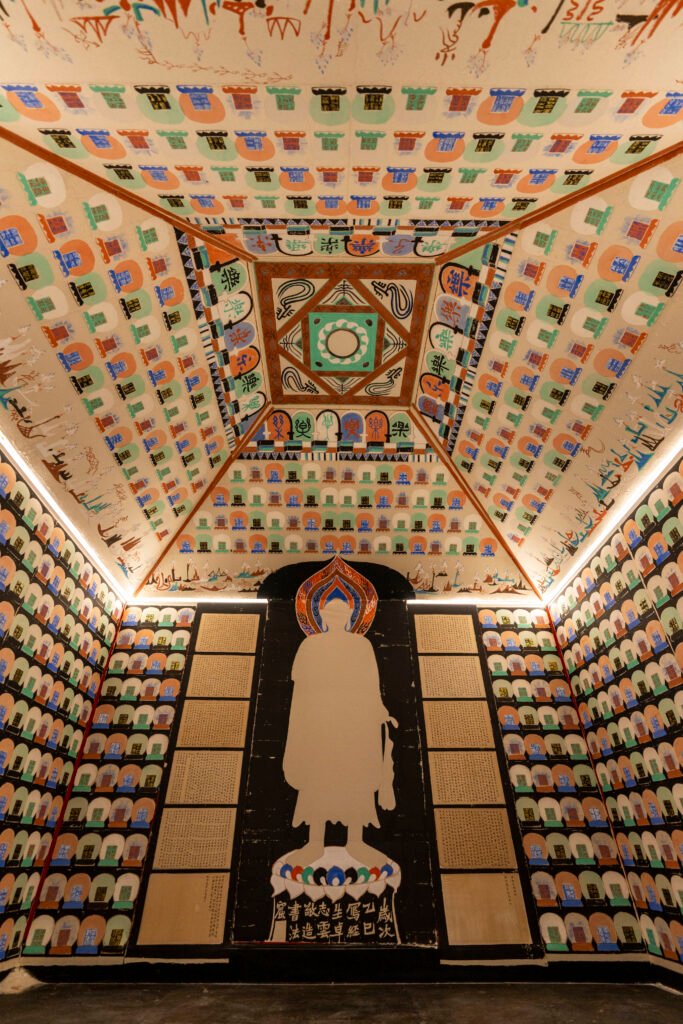
《敦煌当代书法窟》卓志云
《敦煌当代书法窟》是一件集绘画、书法、装置、设计为一体的综合艺术窟。作品改变了敦煌石窟以壁画为主体的表现形式,根据敦煌石窟的主题选择、制作方式以及相关视觉元素,重新塑造了一个以文字为主体的当代书法窟。
全窟以《妙法莲华经》为主要题材,分为上下两个部分:
窟下部主壁佛像的两边写有《法华经》《观世音菩萨普门品第二十五》和《普贤菩萨劝发品第二十八》。其余是干佛名号,以及穿插于干佛名号中间的梵文、藏文、汉文、西夏文、回鹘文和八思巴文的六字真言。
千佛名号的设计,延续了敦煌莫高窟千佛壁画的传统,以汉文篆书为主,根据《过去庄严劫干佛名经》、《现在贤劫千佛名经》和《未来星宿劫千佛名经》三部佛经,书写了一千尊佛名号,分别是入门左手边的过去干佛,正壁的现在千佛以及入门右手边的未来干佛。
《敦煌当代书法窟》是一件集绘画、书法、装置、设计为一体的综合艺术窟。作品改变了敦煌石窟以壁画为主体的表现形式,根据敦煌石窟的主题选择、制作方式以及相关视觉元素,重新塑造了一个以文字为主体的当代书法窟。
全窟以《妙法莲华经》为主要题材,分为上下两个部分:
窟下部主壁佛像的两边写有《法华经》《观世音菩萨普门品第二十五》和《普贤菩萨劝发品第二十八》。其余是干佛名号,以及穿插于干佛名号中间的梵文、藏文、汉文、西夏文、回鹘文和八思巴文的六字真言。
千佛名号的设计,延续了敦煌莫高窟千佛壁画的传统,以汉文篆书为主,根据《过去庄严劫干佛名经》、《现在贤劫千佛名经》和《未来星宿劫千佛名经》三部佛经,书写了一千尊佛名号,分别是入门左手边的过去干佛,正壁的现在千佛以及入门右手边的未来干佛。
The Dunhuang Contemporary Calligraphy Cave is a comprehensive art cave that integrates painting, calligraphy, installation, and design. The work changed the expression form of Dunhuang Grottoes, which was mainly based on murals. According to the theme selection, production method, and related visual elements of Dunhuang Grottoes, it reshaped a contemporary calligraphy cave with text as the main body.
The main theme of the cave is the Lotus Sutra, divided into two parts: upper and lower On both sides of the main wall Buddha statue at the bottom of the cave, there are inscriptions such as “Lotus Sutra”, “Bodhisattva Avalokitesvara Universal Door Chapter 25”, and “Bodhisattva Samantabhadra Exhortation Chapter 28”. The rest are the names of the Thousand Buddhas, as well as six character mantras in Sanskrit, Tibetan, Chinese, Western Xia, Uyghur, and Basiba that are interspersed among the names of the Thousand Buddhas.
The design of thousand Buddha names continues the tradition of thousand Buddha murals in the Mogao Grottoes of Dunhuang, mainly in Chinese seal script. According to the three Buddhist scriptures, the Past Grand Thousand Buddha Name Sutra, the Present Virtuous Thousand Buddha Name Sutra, and the Future Xingxiu Thousand Buddha Name Sutra, 1000 Buddha names have been written, which are the past thousand Buddha on the left side of the entrance, the present thousand Buddha on the main wall, and the past thousand Buddha on the right side of the entrance.
The four robes on the top of the cave are inscribed with the names of three thousand Buddhas from three generations, and the reading order is consistent with the order at the bottom of the cave. Under the Thousand Buddhas at the top of the cave, there is a calligraphy painting called ‘Calligraphy Mountain Forest’, which serves as a boundary connecting the upper and lower parts of the work. The Calligraphy of Mountains and Forests uses the Chinese characters for “mountain”, “grass”, and “wood” to represent mountains and forests. In four directions, the four divine beasts of Qinglong, Baihu, Zhuque, Xuanwu, and related creatures are written in seal script. On top of the Thousand Buddhas at the top of the cave, there is a calligraphy piece called “Calligraphy Heavenly Palace Opera Music”, which uses classic calligraphy from the Shang Dynasty to the Qing Dynasty as a sample and includes 24 characters for “music”. The top of the cave is covered with a “Calligraphy Seaweed Well” which includes a cluster pattern composed of the characters “fly” and “flower” resembling the image of a flying celestial body, as well as a scroll pattern composed of the characters
“rolled grass”.
展览现场
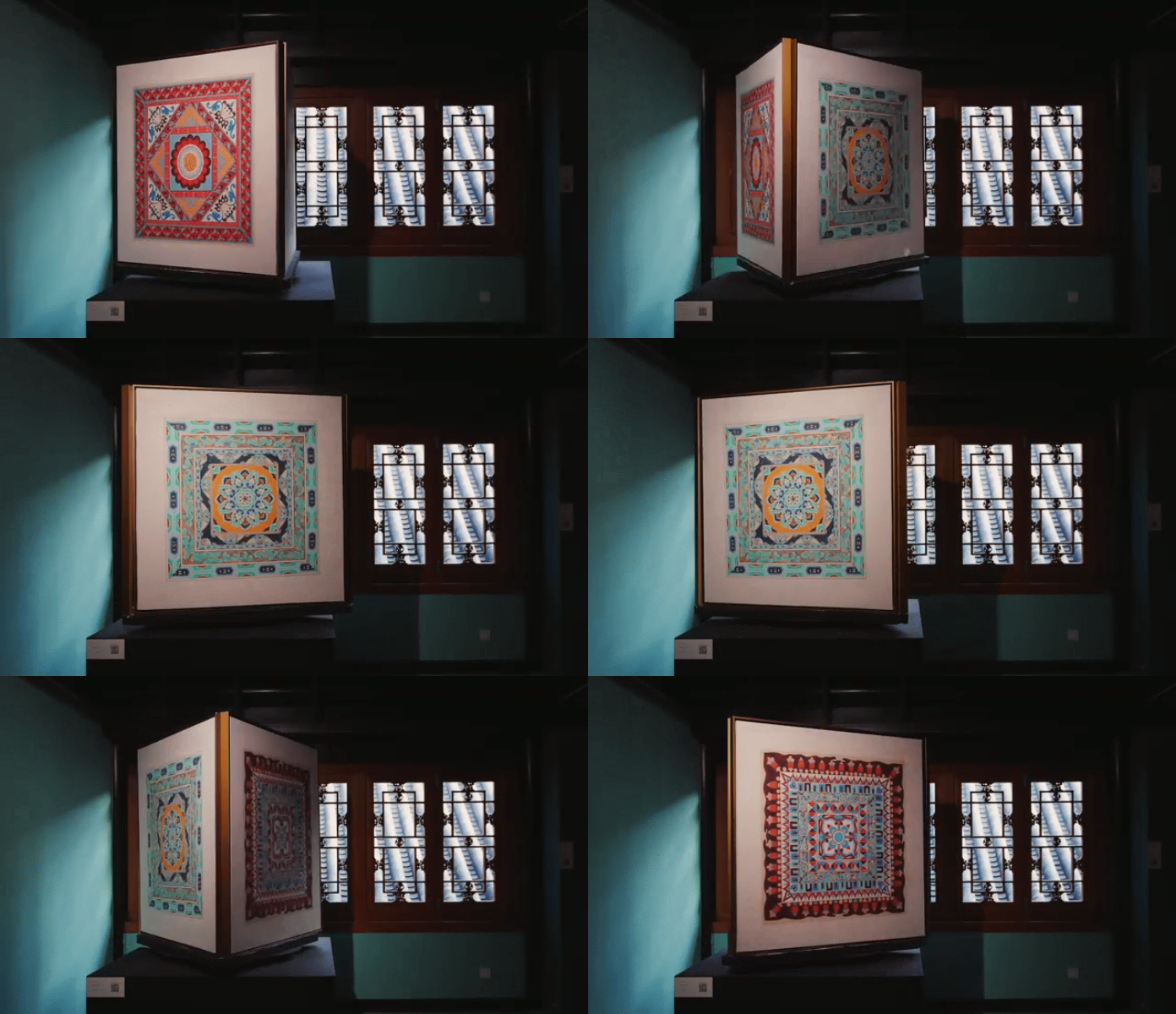

相关项目

南池子
方寸之间, 仰望星河
-敦煌藻井艺术新探

南池子
艺术家阳新
朴素的手工痕迹, 都是人性之微光

南池子
艺术家花甲瑞瑞
有光则灵